
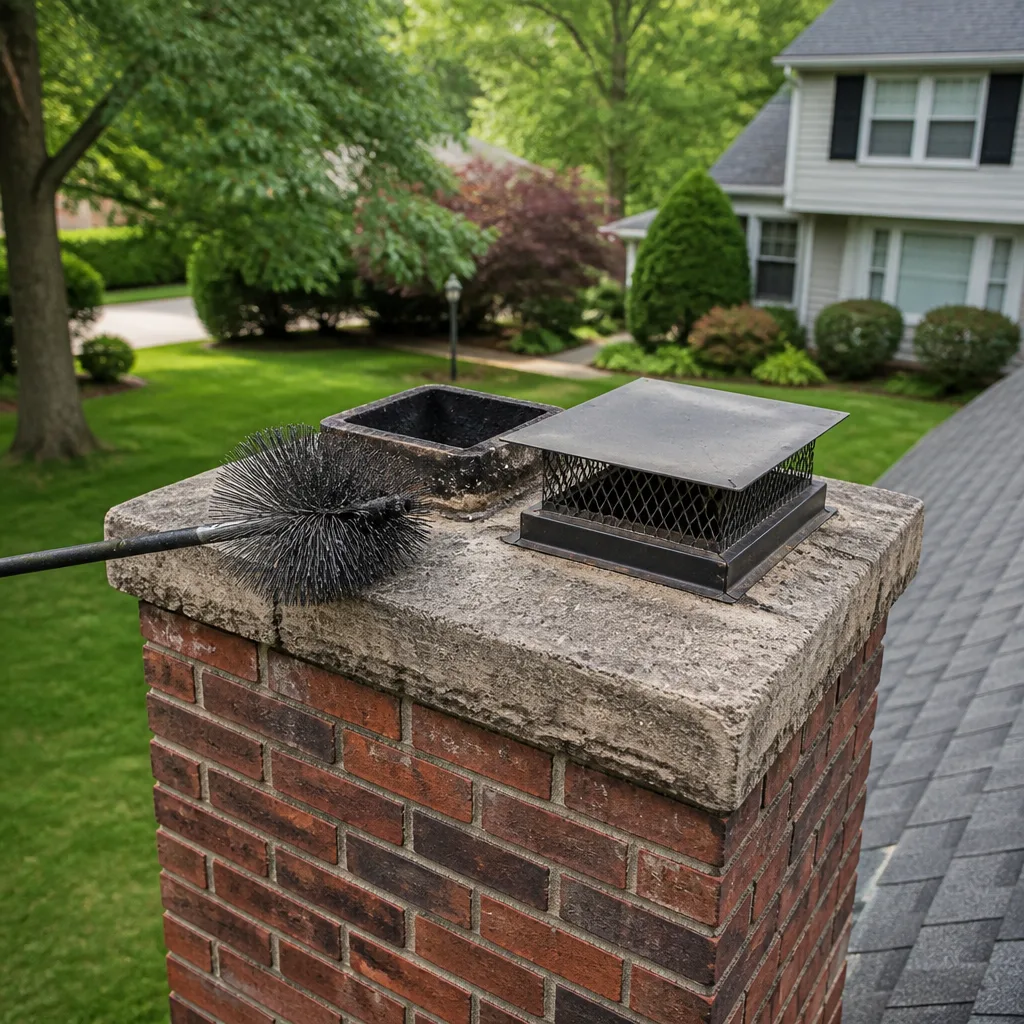
Level 1 sweep and inspection to the NFPA 211 annual standard - flue, crown, cap, and flashing checked and photographed
Chimney sweep logs do not sweep chimneys. They loosen some creosote - which then falls where a brush and vacuum still have to collect it.
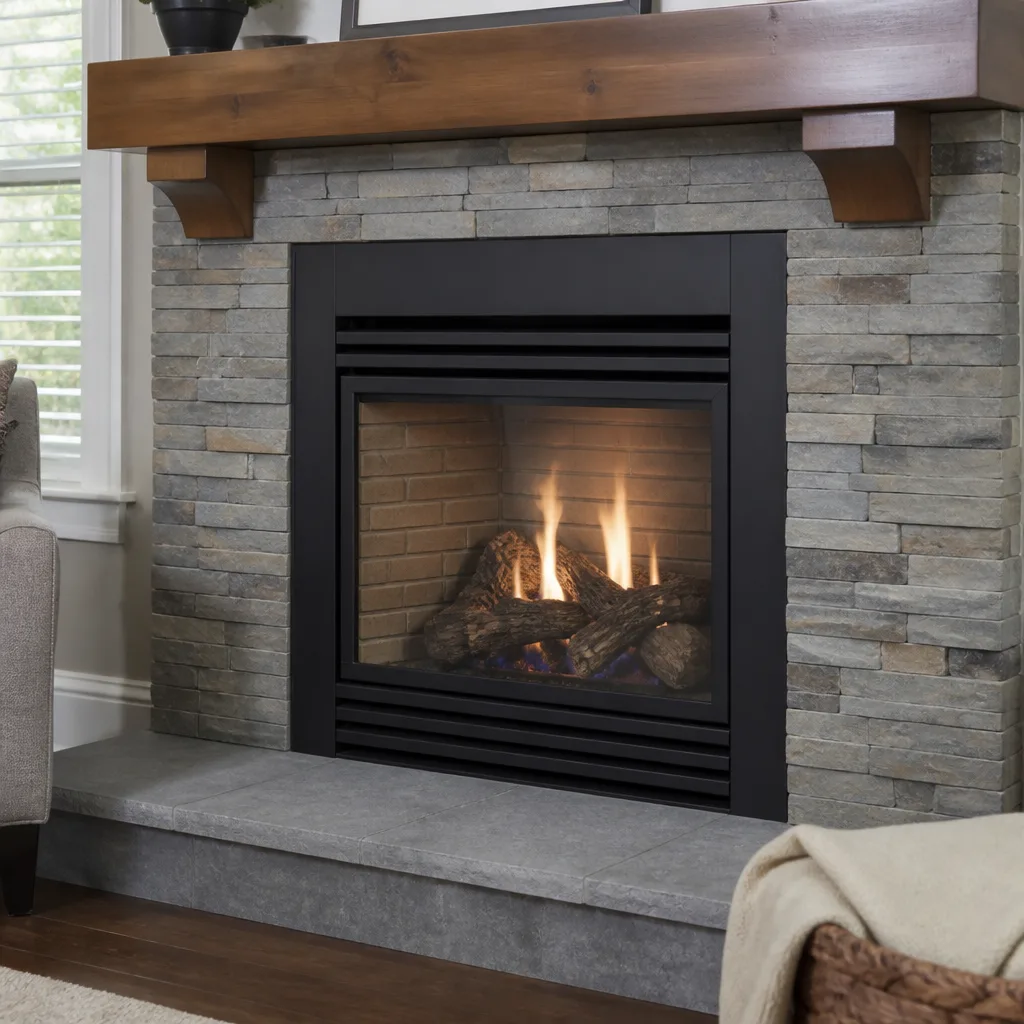
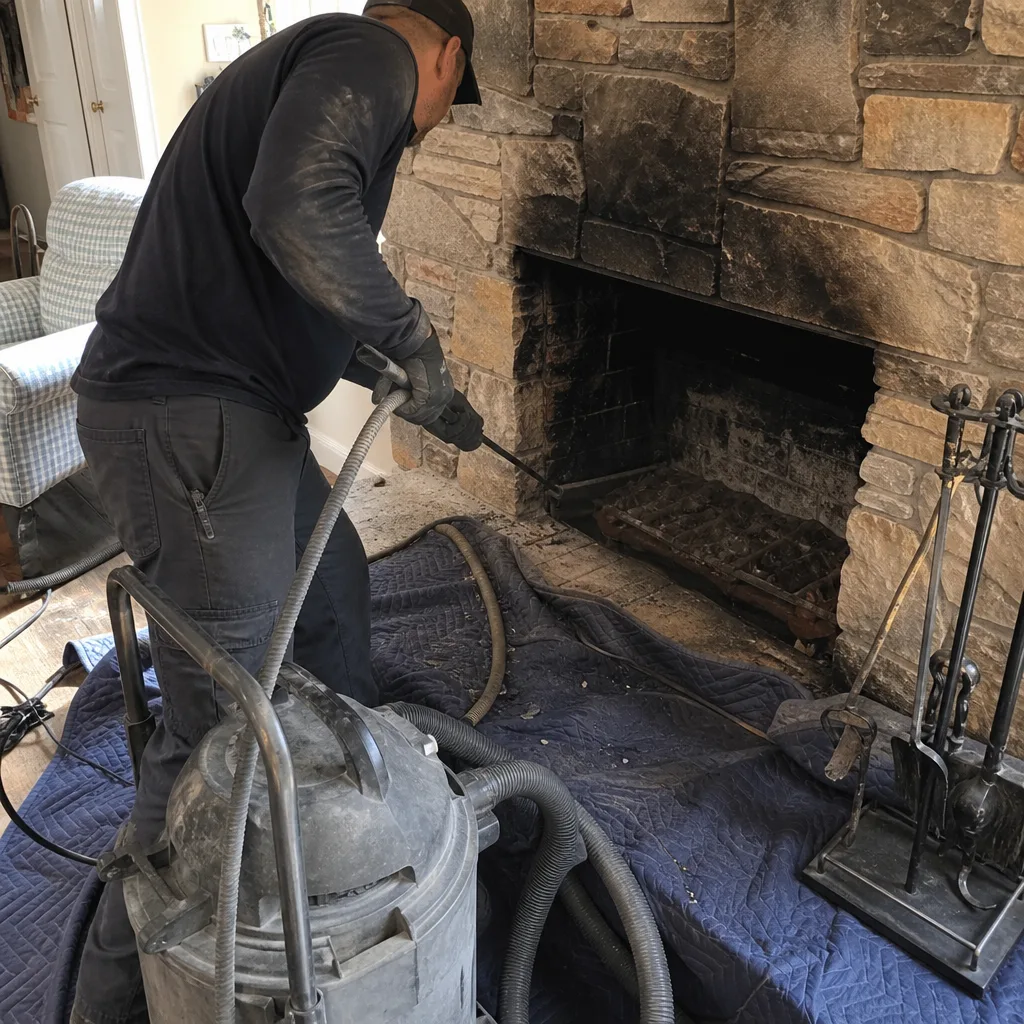 Before
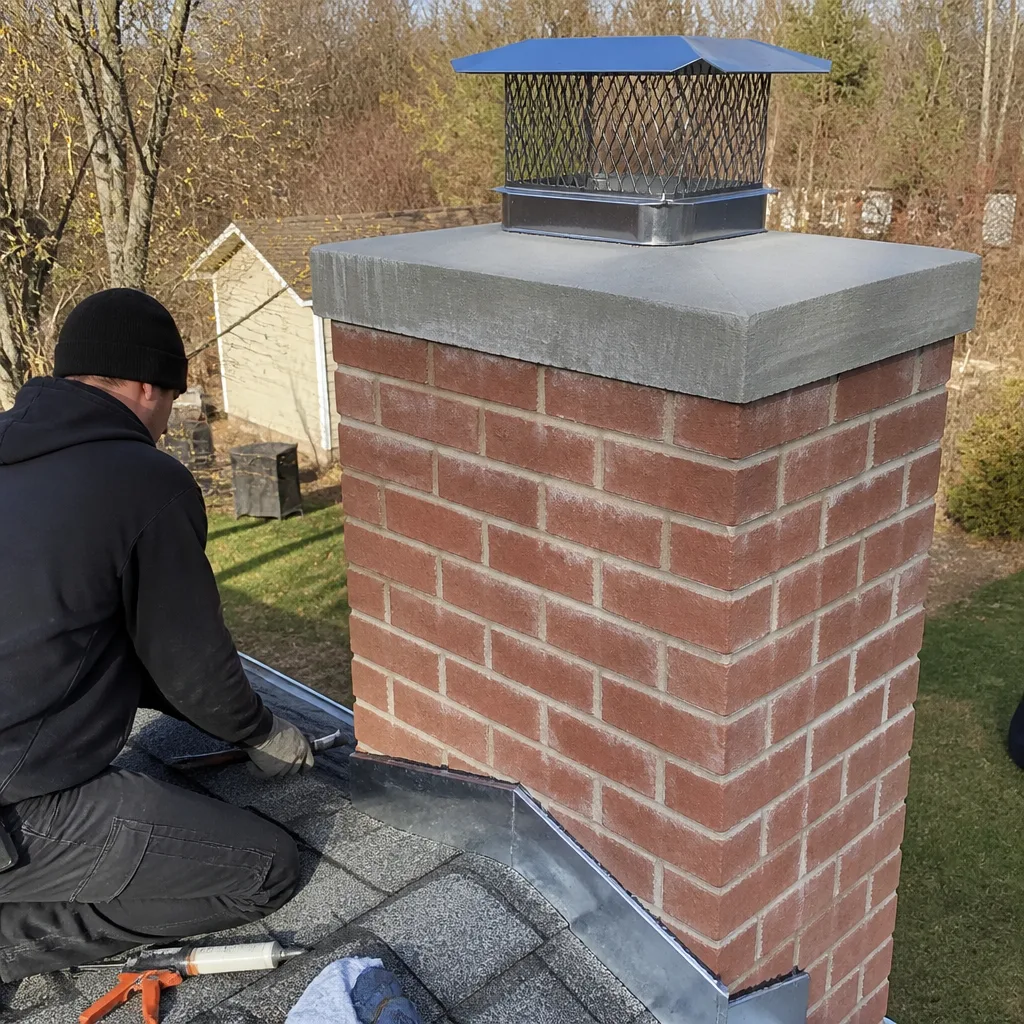 After
After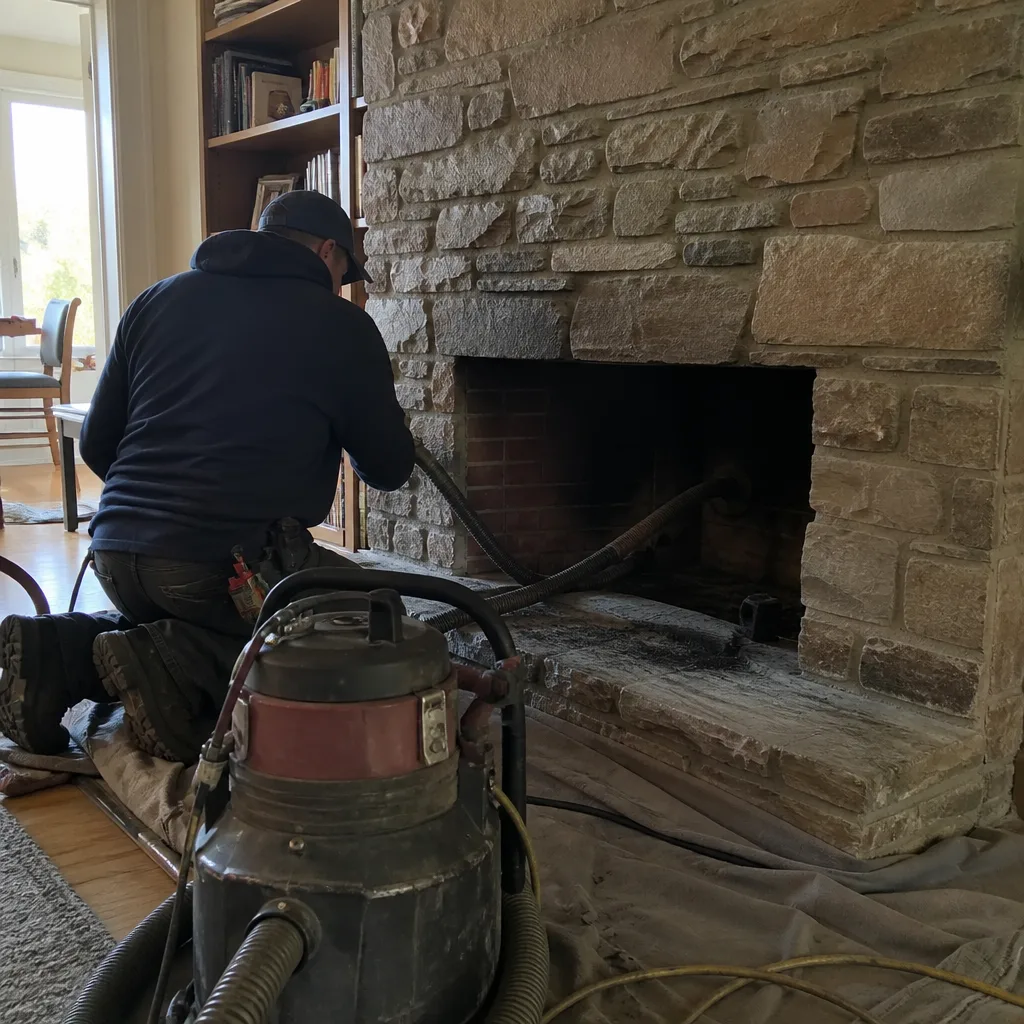 Before
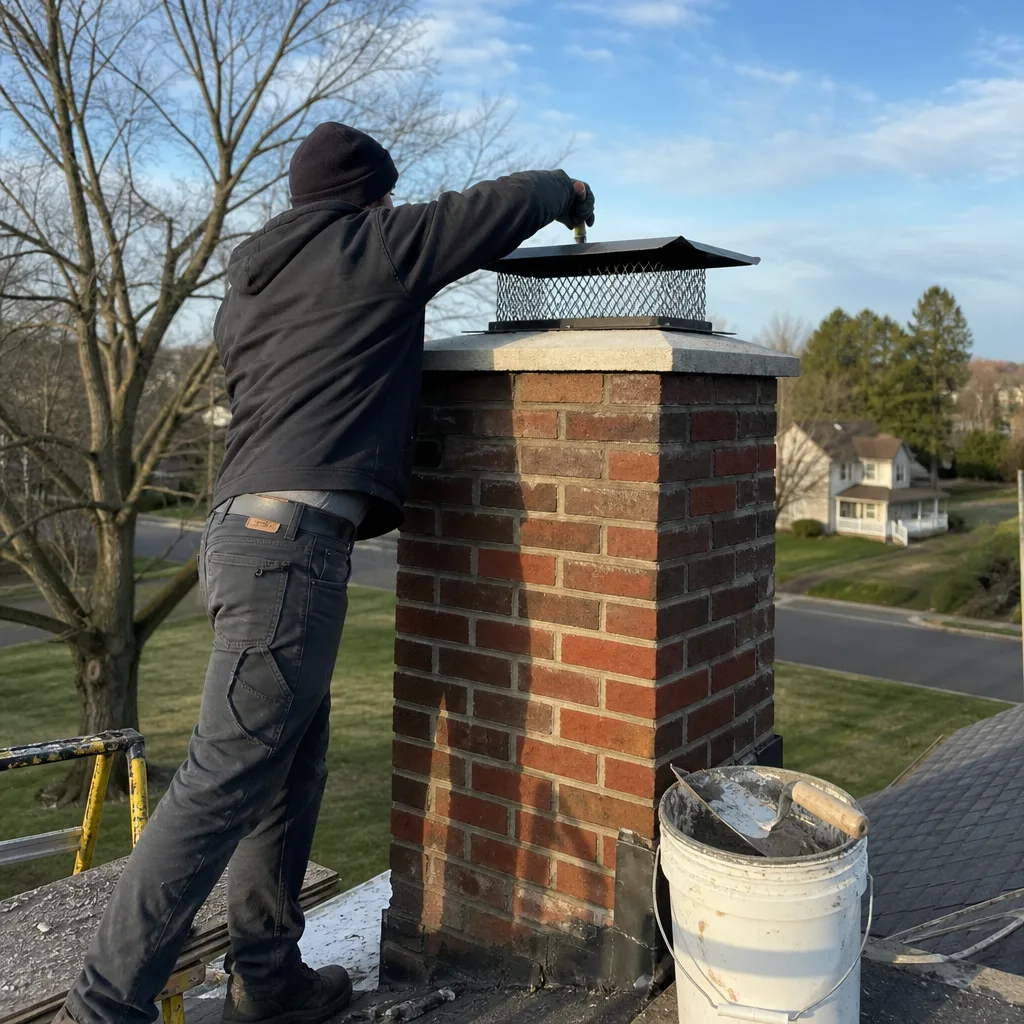 After
After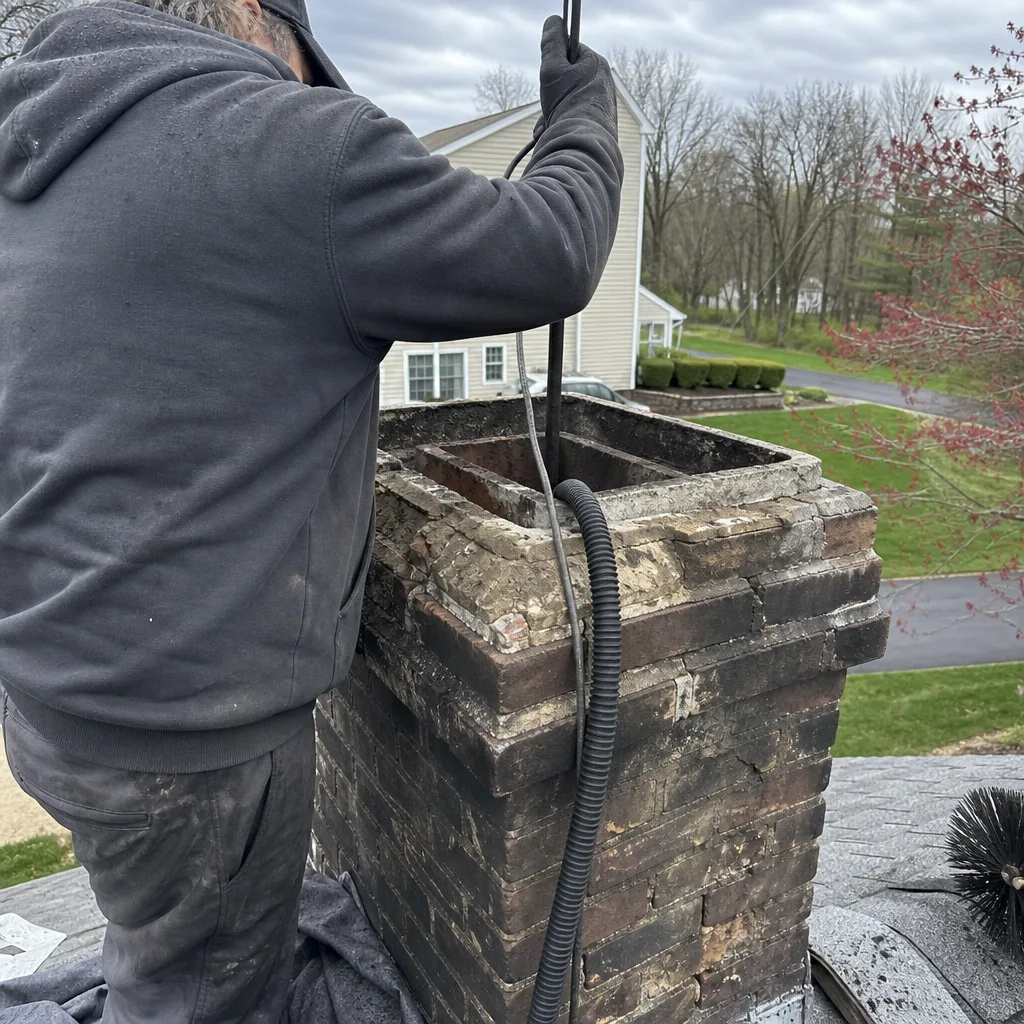 Before
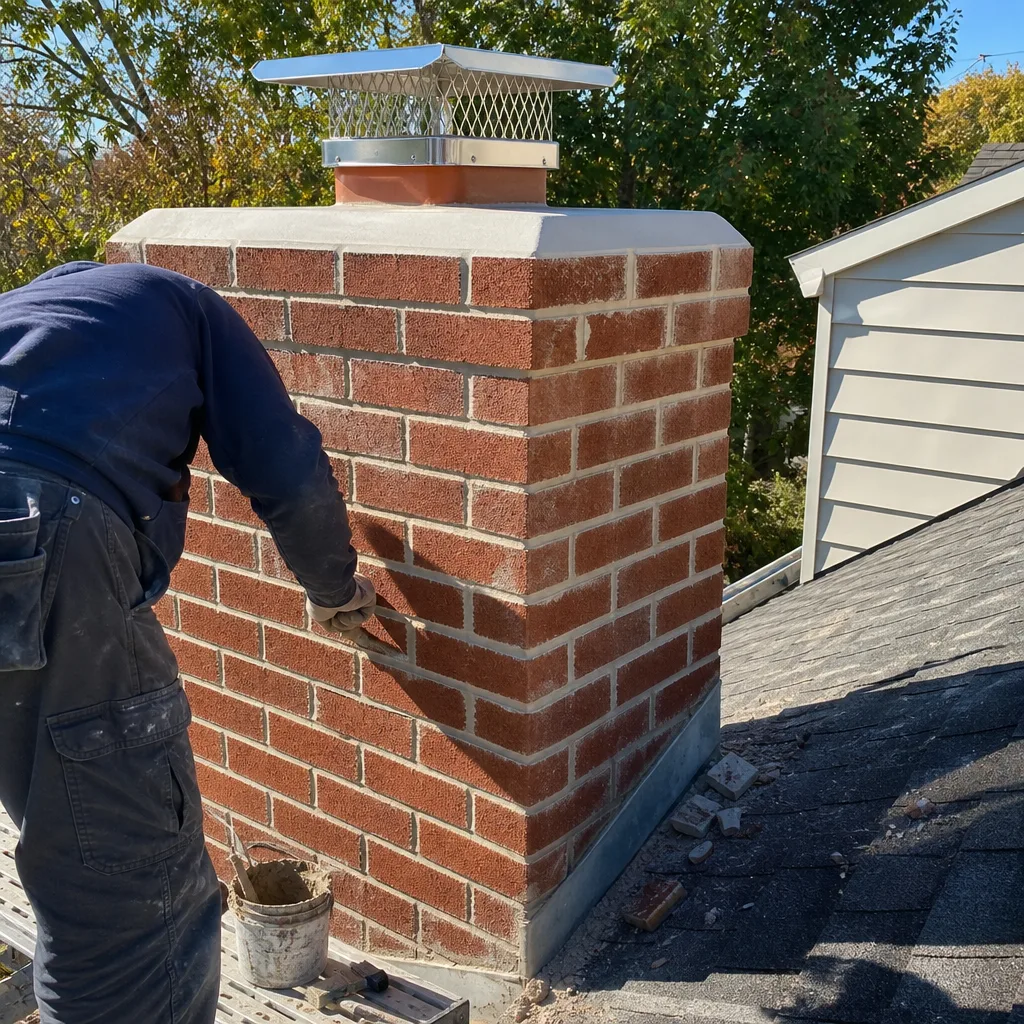 After
AfterSpalling Brick Repair in Doylestown, PA
Spalling brick repair in Doylestown typically runs between $300 and $1,800 depending on how many courses are affected and how far the damage has traveled into the chimney structure. Most jobs can be assessed the same day and completed within one to three visits. If you’re seeing chunks of brick on the ground near your chimney, or the mortar joints look like they’ve been scooped out with a spoon, that’s the freeze-thaw cycle doing exactly what it does to untreated masonry in Bucks County winters.
Top Hat Chimney has been working on chimneys like yours since 1999. Wendell Pike started this company here, still runs it here, and is often the one who picks up when you call (484) 600-2977. Spalling is one of the most common chimney problems we see in Doylestown, and it’s also one of the most ignored – until the day a homeowner notices the chimney is leaning or a brick has worked its way loose at the roofline. If you’re already seeing damage, you can learn more about our Chimney Repair services. We’d rather catch it in year two than rebuild it in year ten.
This page is part of our broader Chimney Repair in Doylestown service. If you’re not sure whether your issue is spalling, mortar deterioration, or something deeper in the flue, that parent page covers the full picture.
When You Need Spalling Brick Repair
Not every flaking brick is a crisis, but none of them are cosmetic. Here’s what we actually see on Doylestown rooftops and in inspection photos that tells us spalling has moved past the “watch it” stage:
- Brick chunks or flakes on the ground or in the firebox. If pieces of your brick face are landing in the mulch bed or the ash pit, the outer wythe is already failing. In older Doylestown colonials with soft clay brick, this can happen fast once a freeze-thaw cycle gets into an unsealed face.
- Mortar joints that are recessed, crumbling, or visibly hollow. When you can press a fingernail into your mortar and leave a mark, the joint has lost its bond. Water gets in, freezes, expands, and the cycle restarts in spring. We see this constantly on chimneys along the older streets in the borough.
- White staining (efflorescence) running down the chimney face. Those white streaks are mineral salts being carried out by water moving through the masonry. The staining itself isn’t structural, but the water causing it is.
- Bricks that look “sunburned” – dark in the center, pale and flaky at the edges. That pattern is classic freeze-thaw spalling. The outer layer of the brick separates from the fired core and eventually pops off.
- Visible gaps at the crown-to-chimney junction. A cracked or deteriorating crown lets water in at the top. By the time it shows up as spalling on the sides, it’s been traveling down through the masonry for at least one full season.
- Mortar that sounds hollow when tapped. During an inspection, if Wendell’s crew taps the joints and gets a dull or hollow sound rather than a solid knock, the mortar has separated from the brick face even if it looks intact from the ground.
Doylestown sits in a climate zone that averages somewhere between 30 and 40 freeze-thaw cycles per year. That’s 30 to 40 chances for trapped moisture to expand inside your masonry and push a face off a brick. Chimneys that weren’t waterproofed after their last repair, or that were pointed with the wrong mortar type, tend to come back to us within a few years.
Our Spalling Brick Repair Process
We don’t start cutting or pointing until we know exactly what we’re dealing with. Rushing into a tuckpointing job without understanding why the masonry failed in the first place just means doing the same job again in three years. Here’s how the work actually goes:
- Visual and close-up inspection from the ground and roof. Wendell or one of his crew gets on the roof with a camera and a set of eyes. We photograph every affected area, tap the joints, and check the crown condition, the flashing at the roofline, and whether any spalling has reached the interior wythe. You get the footage and a plain-English explanation of what we found – no ambiguity about what needs doing.
- Determining the right mortar match. This is where a lot of outfits get it wrong. Pre-1950s homes in Doylestown – and there are many – were often built with soft lime-based brick that requires a softer lime mortar to match. Filling those joints with modern portland cement mortar creates a mismatch in flex and hardness that accelerates spalling rather than stopping it. We test and match before we mix.
- Removing failed mortar and damaged brick. We grind or chisel out the deteriorated mortar to a depth of at least three-quarters of an inch, clear the joint of dust and debris, and remove any brick that can’t hold a proper bond. Salvageable brick is cleaned and kept. New brick is matched as closely as possible in size, color, and firing characteristics.
- Tuckpointing or full repointing. Fresh mortar is packed in layers, tooled to match the original joint profile, and allowed to cure properly. In cooler weather – which Doylestown has plenty of from October through March – we manage curing conditions so the new mortar doesn’t freeze before it sets.
- Crown repair or replacement if indicated. If the crown is cracked or porous, we address it in the same visit when possible. A fresh batch of tuckpointing won’t last if water is still pouring in at the top. We use products from HeatShield where the application calls for it on crown work.
- Waterproofing application. Once the new mortar has cured, we apply a penetrating masonry waterproofing agent that’s vapor-permeable – meaning moisture inside the masonry can still escape, but rain can’t soak in. This is the step that actually extends the life of the repair.
The whole job – from inspection to final waterproofing – usually takes one to two days on the property, sometimes split across visits depending on curing time and weather. Before the truck leaves, you’ll know what was done, why, and what the 90-Day Done Right Promise covers.
Spalling Brick Repair Pricing in Doylestown
Spalling brick repair in Doylestown runs across a pretty wide range depending on access, scope, and whether the damage is cosmetic or structural. For a detailed breakdown, see How Much Does Chimney Repair Cost? (2026 Price Guide) - Doylestown, PA. Here’s an honest look at what the numbers typically look like in this market:
| Scope of Work | Typical Price Range |
|---|---|
| Minor tuckpointing, 1-2 courses (ground level or easy roof access) | $300 – $550 |
| Moderate repointing, upper chimney exterior (scaffolding or lift may apply) | $550 – $950 |
| Brick replacement, 5-15 individual bricks with repointing | $700 – $1,200 |
| Full chimney face repoint + crown repair + waterproofing | $1,200 – $1,800 |
| Waterproofing only (after prior repair, no repoint) | $200 – $400 |
What pushes the number up: roof pitch and chimney height (a two-story Victorian in the borough costs more to access than a ranch on the edge of town), number of brick faces affected, whether replacement brick needs to be sourced to match an older colonial, and whether the crown needs work at the same time. What keeps it down: catching spalling early, before it migrates to the interior courses.
Every job over $200 qualifies for $40 off. Seniors and veterans always get 10% off, no questions asked. There’s no trip charge for calls inside our service county, and upfront pricing is delivered before a single tool comes off the truck. If you’ve already got a written estimate from someone else, we’ll give you a free second opinion – no obligation.
Call (484) 600-2977 to set up a free estimate. The number you hear on the phone is the number on the invoice.
Why Spalling Happens in Doylestown Specifically
Bucks County winters are not the harshest in Pennsylvania, but they are relentlessly wet and cyclical. Doylestown typically sees temperatures that hover around the freezing point for weeks at a stretch in January and February – which is actually worse for masonry than a sustained deep freeze. A sustained freeze keeps the water solid. Temperatures that bounce between 25°F and 38°F over and over let water melt, penetrate open pores, and refreeze inside the brick face before it can drain. That expansion – water expands about 9% when it freezes – is what separates the face from the brick body.
Older neighborhoods like the blocks around Court Street, the West Side, and the properties along East Street built in the late 1800s and early 1900s tend to use a softer, more porous brick than modern construction. That brick was never designed to shed water on its own; it was meant to breathe. When those chimneys get repointed with hard portland cement mortar by someone who doesn’t know the difference, the mortar outcompetes the brick for hardness and the brick face starts to pop off in sheets. We see it every spring.
Newer construction in the developments east of Route 611 doesn’t have the same vintage-brick problem, but it has its own issue: builders sometimes skip chimney waterproofing or use thinner brick veneer over a concrete block core. When that veneer starts to spall after 15 or 20 years, the repair looks simple from the outside but sometimes involves addressing adhesion to the block behind it.
Wendell has been inside chimneys in this county since 1999. That’s not a brochure line – it means he’s seen what happens to Doylestown masonry across 25-plus full weather cycles and knows what the local stock actually needs.
Spalling Brick vs. Just Old Mortar: What’s the Difference?
These two problems often show up together, and they’re sometimes confused with each other. They’re related but not the same repair.
Spalling is damage to the brick body itself – the face of the brick is physically breaking away, flaking, or crumbling. The brick is failing.
Mortar deterioration is the material between the bricks failing – receding, crumbling, or becoming soft and porous. The bricks themselves may still be structurally sound. This is where Mortar Repointing comes in.
In practice, a chimney that’s been leaking for a few seasons usually has both. The mortar gives out first and lets water reach the brick face. The brick face then starts to spall. By the time a homeowner notices spalling, the mortar is already well past serviceable. A good inspection tells you exactly which courses have which problem and where the actual boundary is between “needs pointing” and “needs new brick.”
Key Takeaways
- Spalling in Doylestown is mostly driven by freeze-thaw cycles and water infiltration – not age alone.
- The wrong mortar type for older brick makes spalling worse, not better. Mortar matching matters.
- Repairs range from $300 for minor tuckpointing to around $1,800 for a full face repoint with crown work and waterproofing.
- Waterproofing after the repair is the step that actually prevents it from coming back.
- Catching it early costs a fraction of what a structural rebuild costs later.
- Every Top Hat Chimney job comes with upfront pricing before work starts and a 90-Day Done Right Promise in writing.
FAQs – Spalling Brick Repair in Doylestown
How much does spalling brick repair cost in Doylestown, PA?
Spalling brick repair in Doylestown typically costs between $300 and $1,800, with most single-chimney jobs landing in the $550 to $1,200 range depending on how many courses are affected and what access to the roof requires. Minor tuckpointing on a short chimney with good roof access is on the lower end. A full exterior repoint with crown repair and waterproofing applied afterward is at the higher end. Every estimate from Top Hat Chimney is free and given upfront – call (484) 600-2977 and the price you hear is the price on the invoice.
Is it safe to use my fireplace if the chimney bricks are spalling?
It depends on where the spalling is and how far it’s progressed. Surface spalling on the exterior face of the chimney, above the roofline, usually doesn’t affect the flue immediately – but it’s telling you water is getting into the masonry, and that water eventually reaches the interior. Spalling inside the firebox or the flue is a different matter: loose material can block airflow, create hot spots, or fall and damage the liner. Before you run another fire, have someone look at it. A camera inspection takes less than an hour and gives you a definitive answer. Call us at (484) 600-2977 to schedule one.
Can you repair spalling brick without replacing the whole chimney?
Yes, in most cases. The vast majority of spalling situations we see in Doylestown involve a portion of the chimney face – specific courses near the crown, or one or two sides that get more weather exposure. We remove the failed material, match the brick and mortar to the existing structure, and waterproof afterward. Full rebuilds are necessary only when the damage has compromised the structural integrity of the chimney stack or when the interior liner is involved in the failure. Wendell will tell you honestly which situation you’re in – and if the job doesn’t need doing, he’ll say so.
How long does a spalling brick repair last?
A properly done repair – correct mortar match, full joint depth, followed by a vapor-permeable waterproofing treatment – should last 15 to 25 years in a climate like Doylestown’s. The repairs that fail early are almost always ones where the waterproofing step was skipped or the wrong mortar was used. Every repair Top Hat Chimney does carries a 90-Day Done Right Promise: if something we touched isn’t right within 90 days, one call brings us back at no additional cost. Beyond that, a visual inspection every few years catches anything trying to develop before it becomes a real problem.
Ready to Stop the Damage Before It Goes Deeper?
Spalling brick isn’t going to fix itself over the winter, and it doesn’t slow down on its own. If you’re seeing chips on the ground, white streaks on the chimney face, or joints that look like they’ve been hollowed out, call Top Hat Chimney at (484) 600-2977. Wendell or someone on his crew answers the phone around the clock – no voicemail, no call center. We’ll set up a free estimate, get on the roof, show you exactly what’s going on, and give you a price before any work starts. The home of a real brick repair starts with an honest look.
Seniors and veterans get 10% off. Any repair over $200 gets $40 off. And the 90-Day Done Right Promise is on every job, in writing, every time.
Written by Wendell Pike, Owner at Top Hat Chimney, serving Doylestown since 1999.