

Last updated September 10, 2026
Level 1 sweep and inspection to the NFPA 211 annual standard - flue, crown, cap, and flashing checked and photographed
Chimney sweep logs do not sweep chimneys. They loosen some creosote - which then falls where a brush and vacuum still have to collect it.
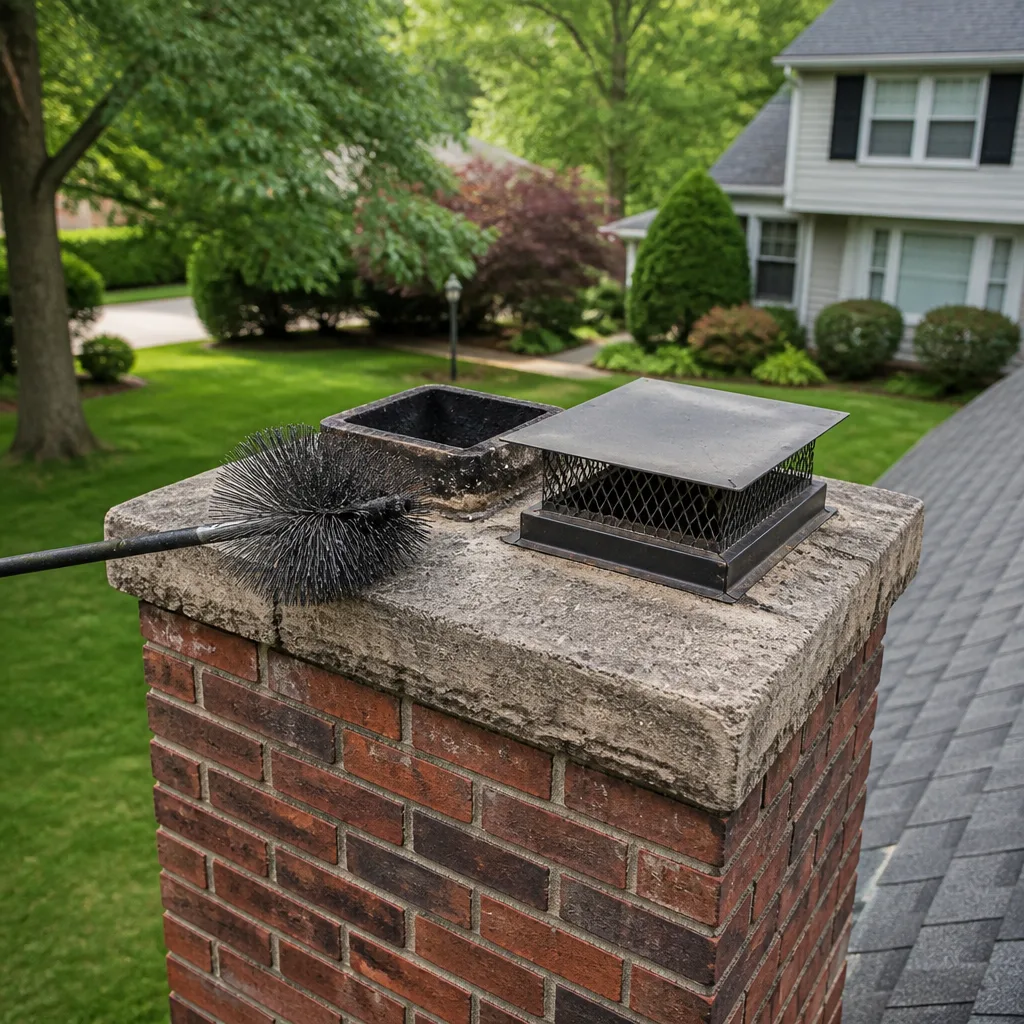
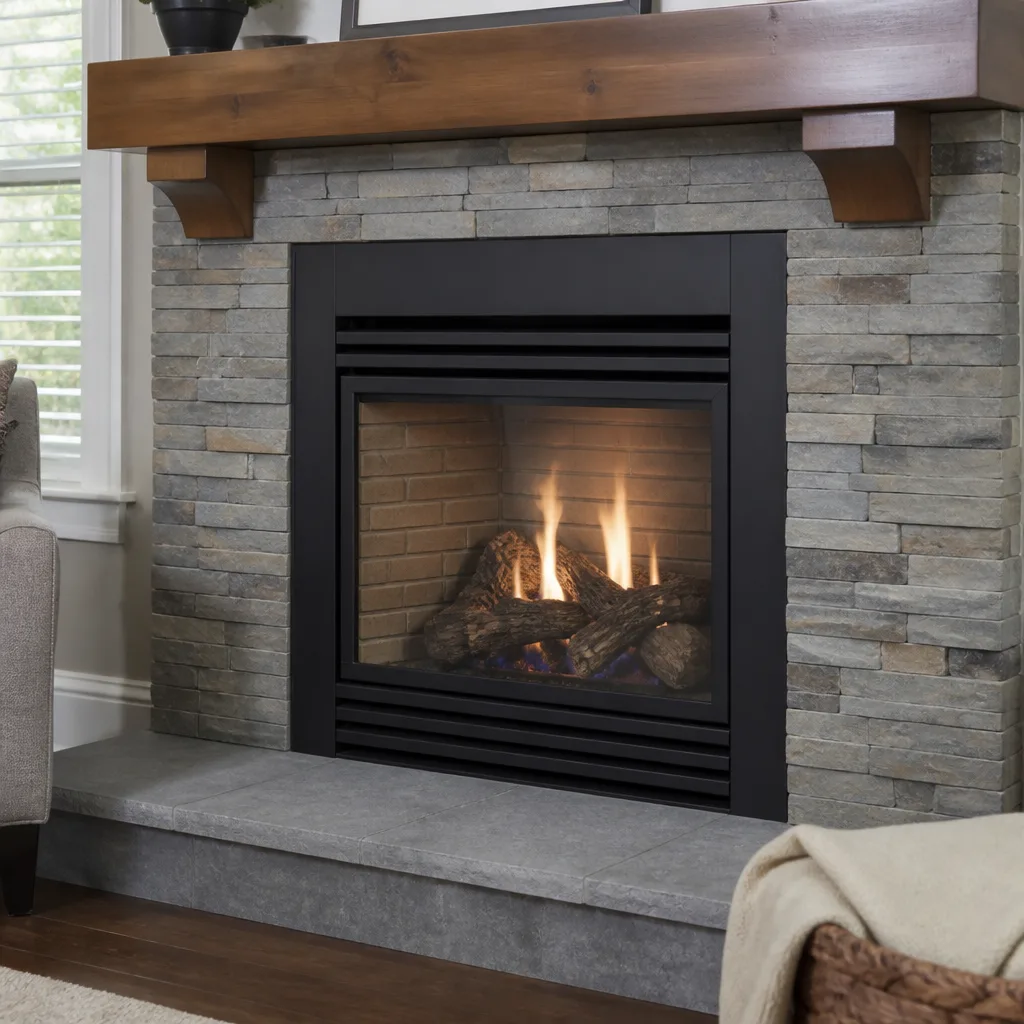
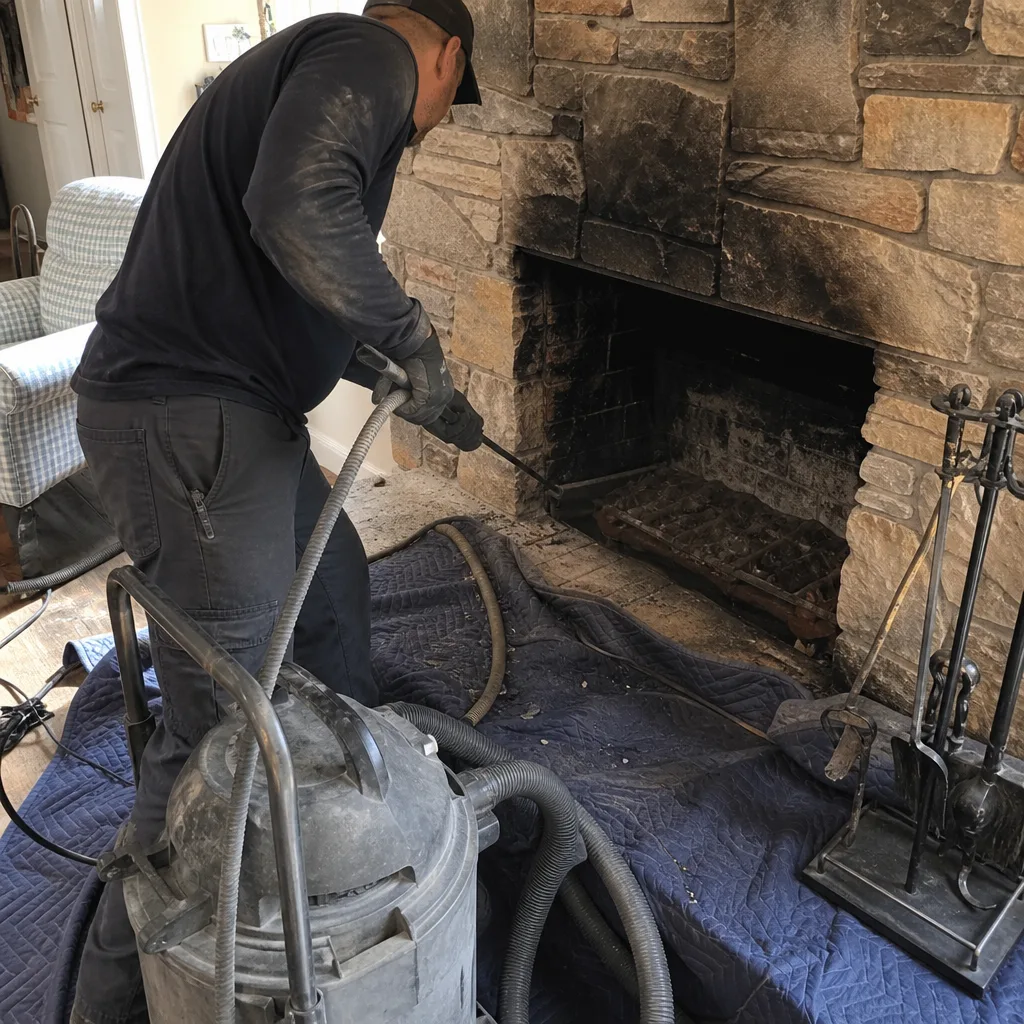 Before
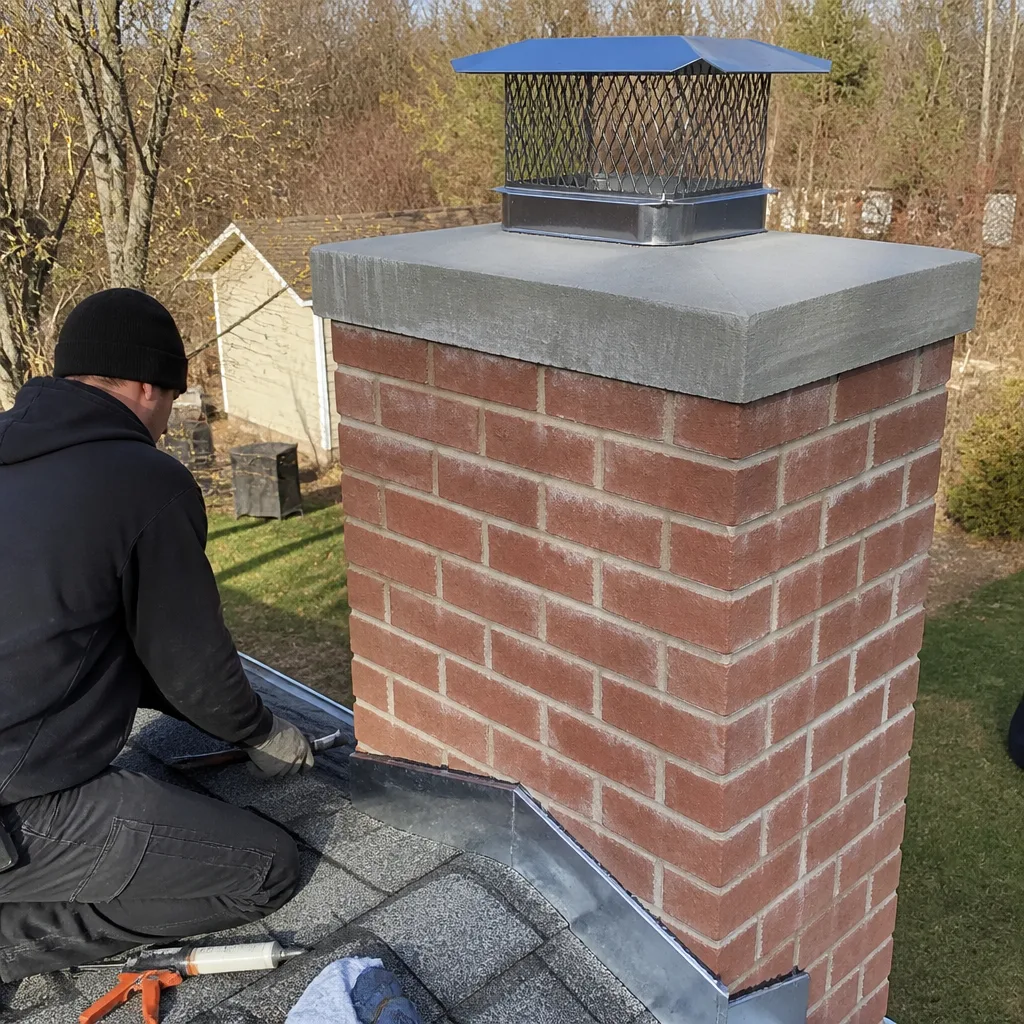 After
After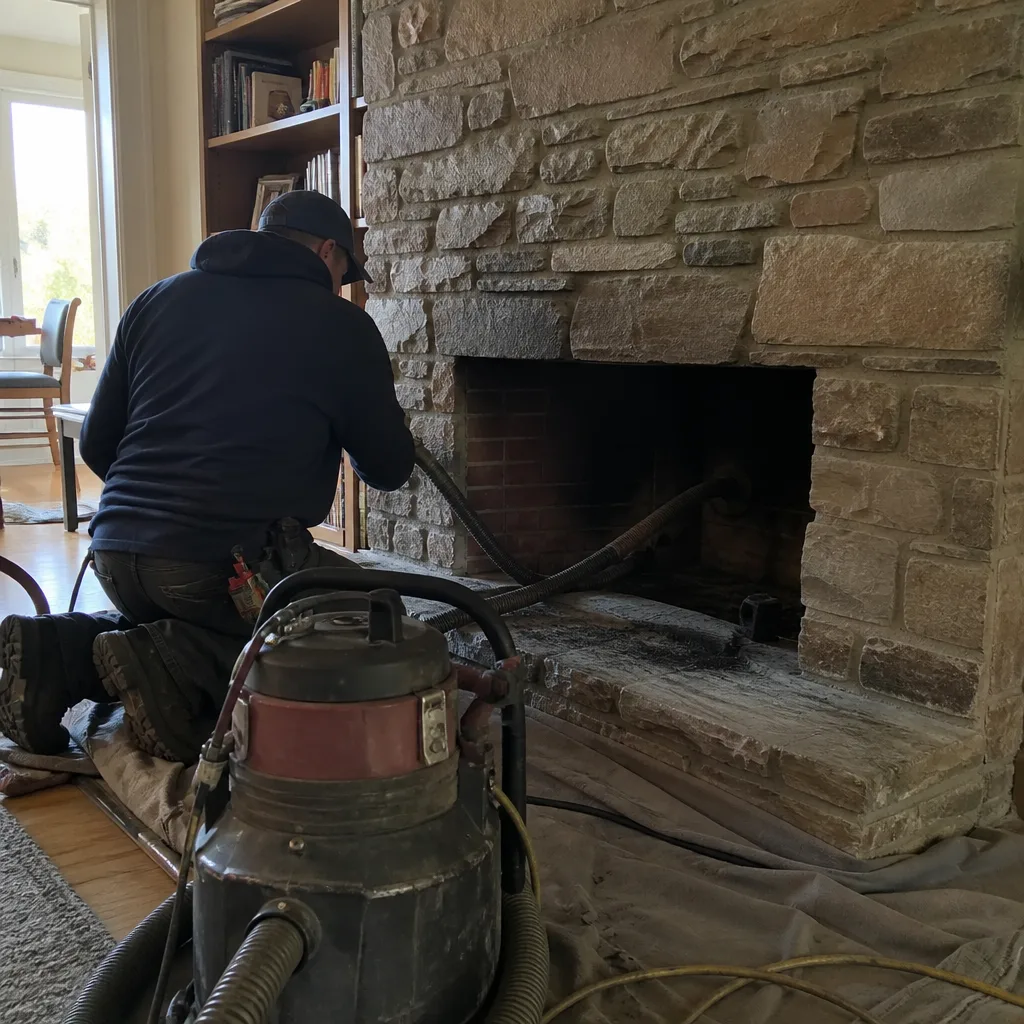 Before
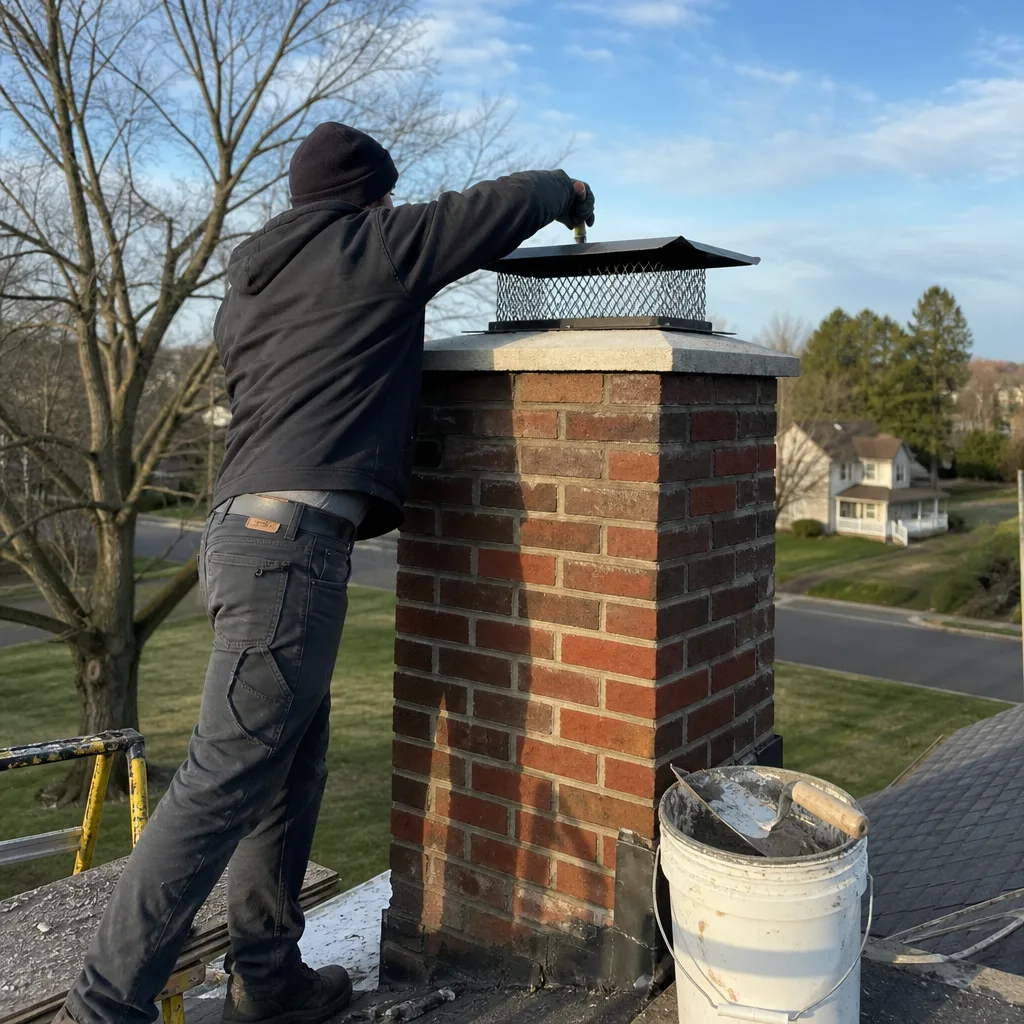 After
After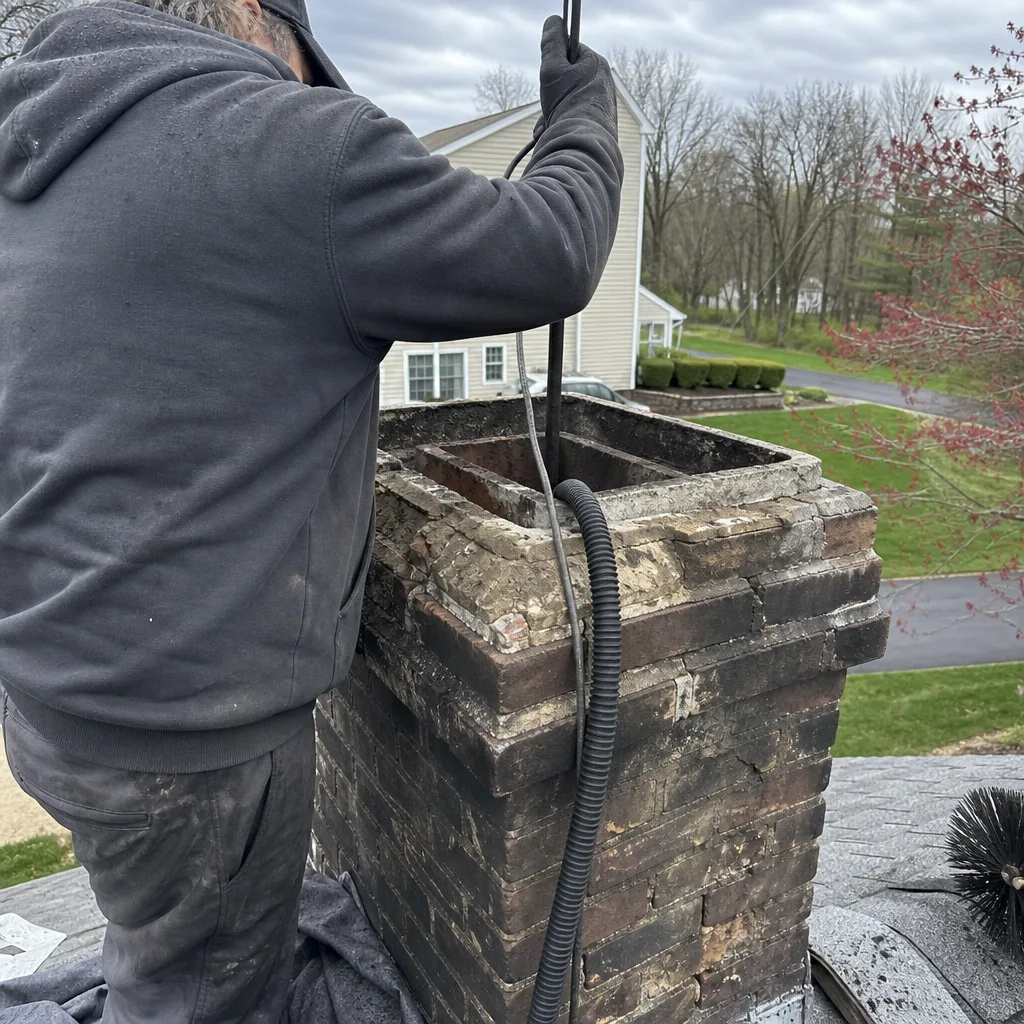 Before
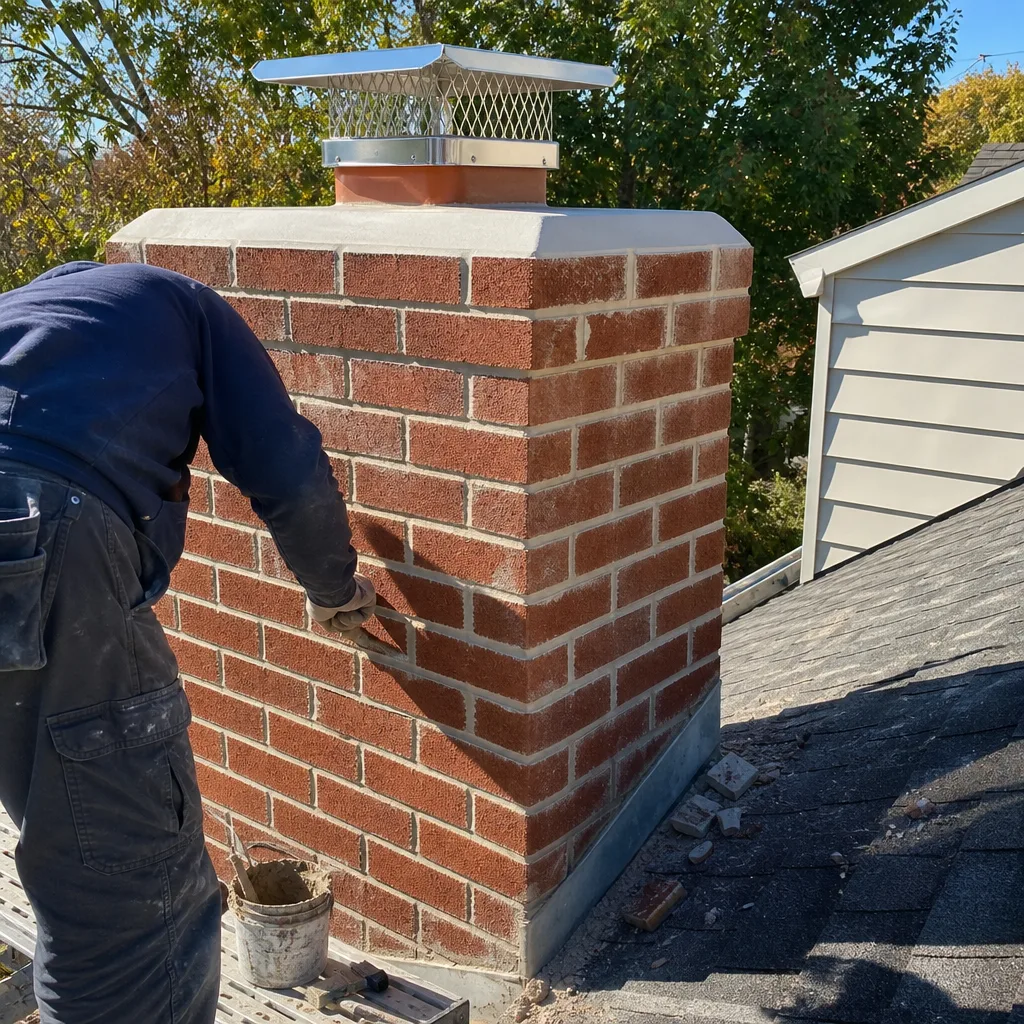 After
AfterSeasonal Chimney Cleaning Care for Doylestown: Year-Round Homeowner’s Guide
The most expensive chimney damage I see every year didn’t happen during heating season. It happened in March, when freezing water finished what a small crack started the previous fall. Homeowners in Doylestown tend to think of chimney care as an October chore, something you handle before the first fire of the season. But the reality is that a chimney takes a beating twelve months a year around here, and the calendar that matters looks nothing like the one written for a generic Mid-Atlantic audience. This guide walks through what actually happens to your chimney each season in Bucks County, when to schedule work, and what you can safely check yourself between professional visits, with more guides & resources available for deeper reading.
Quick Answer
Doylestown’s chimney season runs year-round: schedule your annual sweep in July or August when scheduling is easy and prices are steady, check for freeze-thaw masonry damage in late winter, watch for animal nesting in April, and verify your cap and crown after heavy summer rains. A yearly sweep plus seasonal visual checks prevents most expensive repairs and keeps your family safe through heating season.
Table of Contents
- The Bucks County Freeze-Thaw Window: What It Does to Masonry
- Why July and August Are the Smartest Months to Schedule a Sweep
- Spring Nesting Season and Protected Wildlife in Doylestown
- What to Check After Heavy Summer Rain Before Fall Fires
- The Late-Fall Task Most Doylestown Homeowners Skip
- Burning Practices That Keep Creosote Down Year-Round
- Common Mistakes to Avoid
- When to Call a Professional
- Frequently Asked Questions
- The Bottom Line
The Bucks County Freeze-Thaw Window: What It Does to Masonry
Here in Doylestown, the most dangerous stretch for your chimney runs from roughly late January through mid-March. That’s when daytime temperatures climb above freezing and nighttime temperatures drop back below it, over and over again. Water seeps into hairline cracks in the crown, the mortar joints, or the brick face during the day. At night it freezes and expands by about nine percent. That expansion acts like a wedge, prying the crack wider each time the cycle repeats.
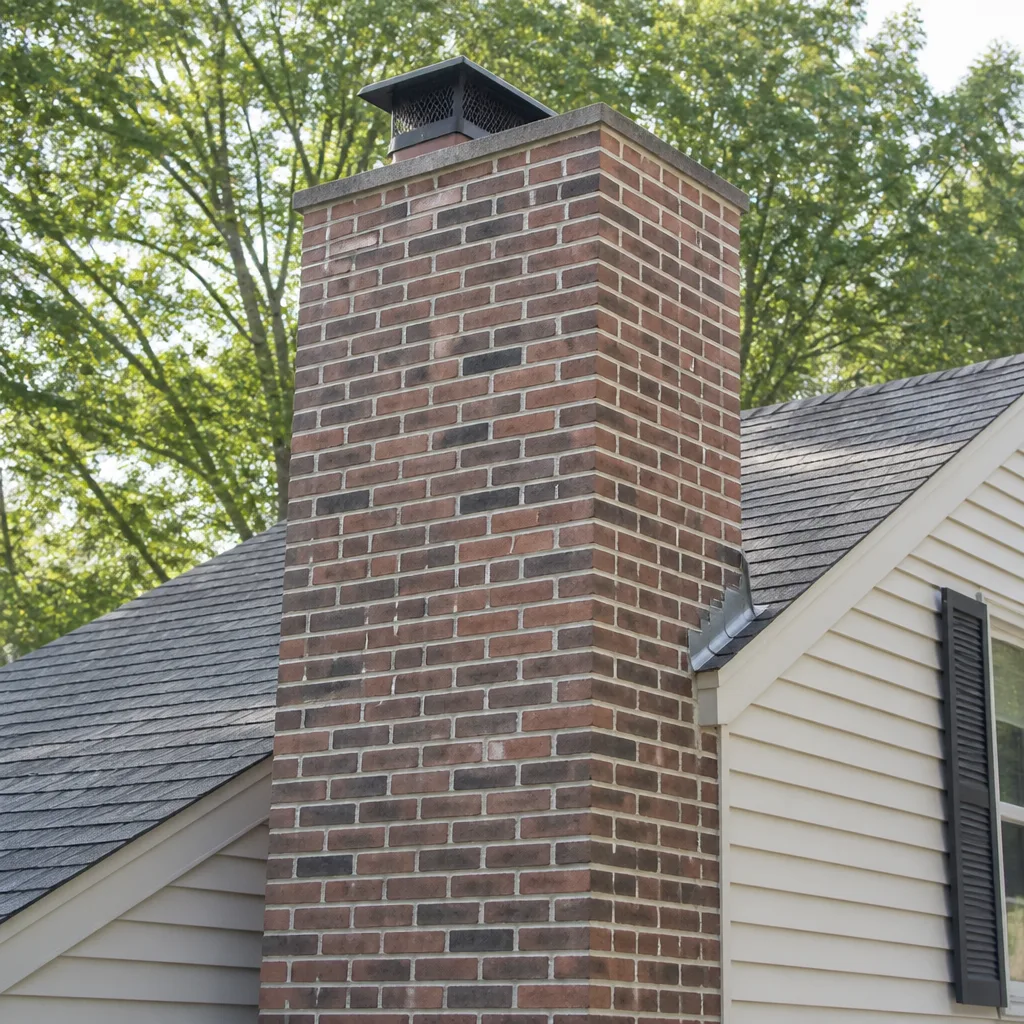
We’ve pulled apart chimneys in Doylestown Borough, Buckingham, and New Britain that looked fine from the ground but had crowns split into three or four pieces from a single bad winter. The damage isn’t dramatic in the moment. It’s quiet and cumulative. A crack the width of a thumbnail in January becomes a structural problem by the time the daffodils come up.
What does freeze-thaw damage actually look like from the ground? Three specific signs worth watching for in late February and early March:
- Spalling bricks: The flat face of a brick flakes off and leaves a rough, recessed surface. You’ll often find the chips on the roof or in the gutter below the chimney.
- White staining (efflorescence): Water dissolving salts inside the masonry leaves a chalky white residue on the brick surface when it evaporates. It’s not cosmetic. It tells you water is moving through the chimney in places it shouldn’t.
- Deteriorating mortar joints: Run a finger along the mortar lines where you can reach from a ladder at the roofline. If the mortar crumbles like sand, the chimney has already absorbed more water than it should.
The fix is usually straightforward when caught early: a crown repair or resurfacing, tuckpointing of the affected joints, and possibly a water repellent treatment designed specifically for masonry chimneys. Left alone, the same forces will eventually loosen bricks to the point where the top section needs a partial rebuild. That’s a five-figure job compared to a few hundred dollars for early intervention. In Doylestown’s climate, this isn’t a maybe. It happens every year to chimneys that are already compromised.
Why July and August Are the Smartest Months to Schedule a Sweep
Every October, we get the same calls: “Can you come out before Thanksgiving?” And every October, the answer is that we’ll try, but so is everyone else in Bucks County. The industry runs on a fall surge, and chimney companies schedule accordingly. By waiting until the weather turns, you’re competing for the busiest slots of the year and often paying a premium for the privilege.
Scheduling your chimney cleaning in Doylestown during July or August solves three problems at once:
- Better scheduling flexibility: Wendell and his crew can give you a real arrival window and stick to it. Fall appointments run long because every job before yours took longer than expected.
- Steady pricing: Our rates don’t change with the season, but many companies charge rush or peak-season premiums in October through December. Booking off-peak keeps your invoice predictable.
- Time to fix what the sweep finds: If the cleaning turns up a cracked flue tile or a deteriorating damper, you’ve got weeks to schedule the repair before you need the fireplace. Find it in late October and you’re choosing between an emergency repair call and skipping the fireplace for the season.
There’s a chemical argument for summer sweeping too. Creosote left in the flue through the humid Bucks County summer absorbs moisture from the air, which makes it harder to remove and more corrosive to the flue liner. A clean flue stored dry through July and August performs better on day one of heating season than one cleaned the week before. Think of it like cleaning the grill in November when last summer’s grease has hardened versus cleaning it right after the last cookout.
Spring Nesting Season and Protected Wildlife in Doylestown
April is the month when animals decide the top of your chimney looks like prime real estate. Chimney swifts, starlings, sparrows, and raccoons all compete for the same protected, elevated cavity your flue provides. And here’s the part most Doylestown homeowners don’t know until it’s too late: some of these animals are federally protected once they’ve established a nest.
Chimney swifts are protected under the Migratory Bird Treaty Act. Once a swift has built its nest and laid eggs inside your chimney, federal law prohibits removing the nest until the birds leave on their own. That’s not a suggestion and it’s not an inconvenience. It’s a legal constraint that affects when you can legally have work done. Swifts typically arrive in Doylestown in late April and depart by late summer, and during that window, disturbing an active nest can carry significant federal penalties under Chimney Cleaning Permits, Codes & Inspections in PA: What You Need to Know.
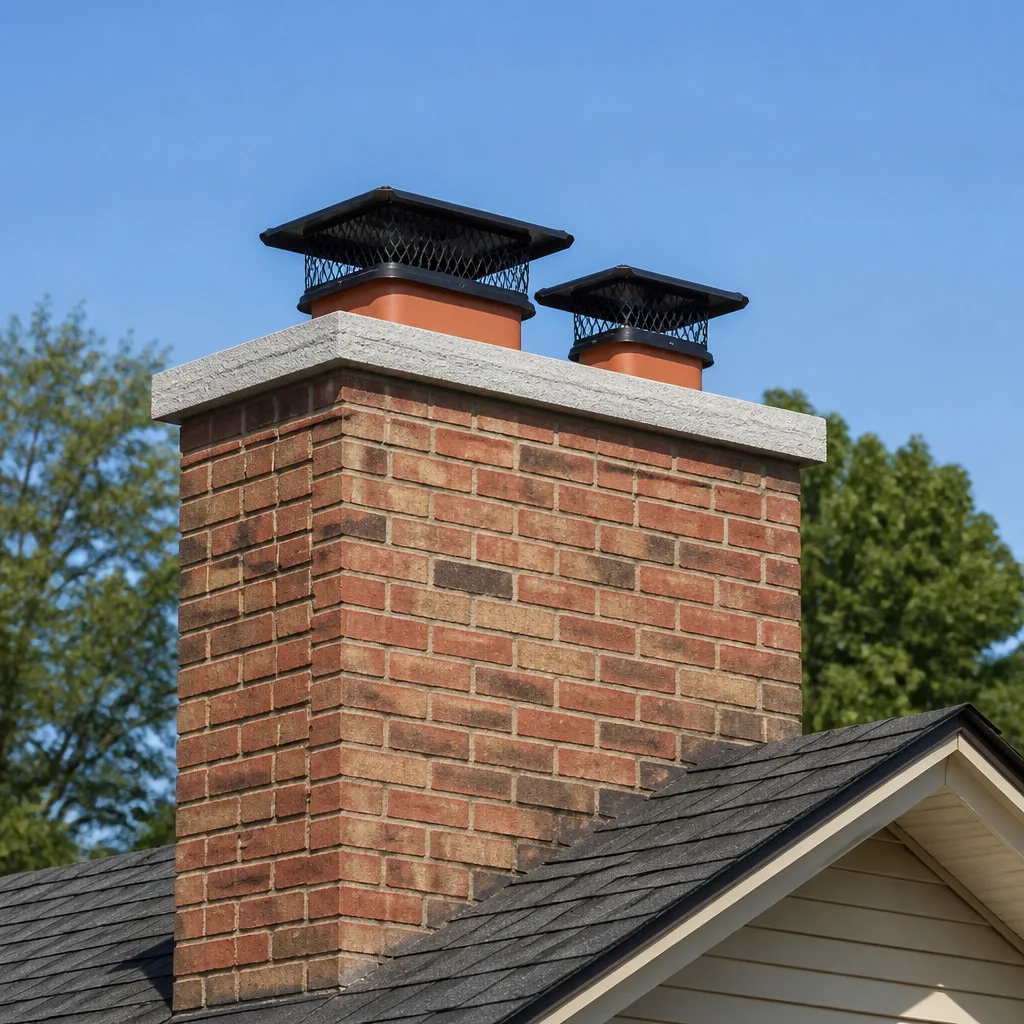
This is why the cap matters, and why it matters before April. A properly installed chimney cap with a wire mesh screen keeps birds and raccoons out altogether, which means you never have to deal with the protected-species problem in the first place. If you don’t have a cap, or have a cap with damaged mesh, spring is when you’ll find out. Raccoons are a different problem: they don’t just nest, they carry debris up the flue, and a mother raccoon with young in your chimney is a genuinely dangerous animal to confront yourself. We’ve been called to Doylestown homes in May where a raccoon had been living in the firebox for the better part of a month.
What should you watch for? Scratching or thumping sounds from the chimney, especially at dawn and dusk; bird activity concentrated around the chimney top; and droppings or nesting material visible in the firebox. If you hear any of this, don’t reach up there to find out what it is. Call someone who deals with it properly, and time the removal around the legal requirements for protected species. A good cap prevents all of it.
What to Check After Heavy Summer Rain Before Fall Fires
Bucks County summer thunderstorms are intense, and they follow a pattern: a long dry spell, then three days of downpours that drop more water in a week than the rest of the month combined. That water tests your chimney’s water management system in a way nothing else does. The humid weeks that follow create their own complication, because any moisture trapped in the flue has weeks to interact with creosote and masonry before temperatures cool enough to burn again.
After a heavy rain, three checks tell you whether you’re ready for fall:
- Look at the crown from a distance: Use binoculars from the yard if you don’t want to climb. You’re looking for standing water on the crown surface, which indicates a crown that’s uneven or cracked enough to pool water instead of shedding it. A crown should slope away from the flue liner and drain fast.
- Check the firebox for moisture: A slick, dark stain on the back wall of the firebox after rain means water is entering from above. Don’t confuse this with normal firebox staining from past fires. New moisture moves the stain or changes its color.
- Open the damper and listen: A metallic drip sound inside the flue means the rain cap is no longer doing its job. The cap may be rusted through, the mounting may have worked loose, or the cap may not be sized correctly for the flue tile in the first place.
Summer humidity affects unused chimneys from the inside too. A chimney that sits sealed up through July absorbs ambient moisture, and that moisture accelerates the breakdown of any creosote deposits left from last season. It also creates conditions where mold can grow inside the firebox and lower flue. The fix is simpler than it sounds: run the fireplace occasionally through the summer, keep the damper positioned correctly, and if there’s been a recent heavy rain, let the firebox breathe for a day before closing it up tight.
The Late-Fall Task Most Doylestown Homeowners Skip
The obvious fall task is the sweep. The one most people skip is the damper inspection, and in Doylestown it costs homeowners more than any other single component. The damper is the steel or cast-iron plate that seals the throat of the fireplace when you’re not burning, and it fails in ways that are easy to miss. A damper that doesn’t seal properly lets heated air pour out of your house all winter, which makes your furnace work harder and drives up your heating bill month after month.
Here’s what a damper should do. It should open fully with minimal resistance, stay open while you burn, close firmly with no gaps at the edges, and seal tightly enough that you can’t feel air movement when you hold a hand above it from inside the firebox. What we find in Doylestown homes, particularly older homes in the borough with original fireplaces, is the opposite: dampers rusted in place from years of moisture, dampers warped from heat so they don’t close flush, and dampers that have shifted in their mounting tracks and bind partway through their travel.
The test takes thirty seconds. On a cold fall evening with the fireplace completely cold, hold a lit match or lighter flame near the throat of the firebox around the damper edges. If the flame dances or leans consistently, air is moving through a gap. The air you feel escaping is air you paid to heat. A damper repair or replacement typically costs far less than a season of that loss.
This is also the time to check the smoke chamber and the area where the firebox narrows toward the flue. Creosote builds up heavily in these transitions, and smoke chambers are notoriously under-inspected by low-cost sweeps who only run a brush up the flue and call it done. A good fall visit covers the full path: firebox, damper, smoke chamber, flue, cap, and crown. If any of those get skipped, you’re paying for a partial job.
Burning Practices That Keep Creosote Down Year-Round
Your flue doesn’t care how the fire looks. It cares how it breathes. Creosote accumulates in direct proportion to how incompletely your wood burns, which means how you burn matters as much as what you burn. Doylestown homeowners who burn smart can go longer between cleanings, reduce smoke problems, and extend the life of their liner significantly.
Burn seasoned hardwoods, not green wood or softwoods like pine and spruce. Seasoned means cut, split, and stacked for at least twelve months, and preferably through two summers. Oak and hickory are ideal. Maple and ash are good. Greenwood steals heat from the fire to boil off its own moisture, which cools the flue gases and condenses more creosote on the flue walls. That’s not a minor difference: green wood can double or triple the creosote deposited in a single season.
Burn hot and bright rather than smoldering low. A smoldering fire is a creosote factory. The low-temperature smoke carries unburned wood gases up the flue, and those gases condense as sticky tar inside the flue. Once a year, burn or no burn: chimneys break in the off-season too. So maintain the discipline of a clean flue regardless of how much you plan to use the fireplace this winter.
What about the firewood itself? Store it off the ground on pallets or racks, keep the top covered while allowing the sides to breathe, and stack it away from the house foundation. Wood stored against the house holds moisture and invites termites and carpenter ants. Wood stored in a fully enclosed shed without air movement will not dry, no matter how long it sits there.
One more local point: Doylestown and Bucks County have air quality burn bans during certain weather inversions, usually in winter. These are announced through township channels, and burning during a declared ban can result in fines. A clean flue burns cleaner during the times burning is allowed, which matters for your neighbors and for meeting local air standards.
Common Mistakes to Avoid
- Waiting until October to book a sweep: You’ll compete for the busiest weeks of the year in Doylestown, pay whatever the market demands, and lose the ability to fix issues before cold weather arrives. Book in July or August instead.
- Skipping the cap because the fireplace “never leaks”: The cap isn’t just a leak preventer. It keeps animals out, and April nesting season in Bucks County is when uncapped chimneys become a protected-species problem. A cap is cheap insurance compared to waiting out a swift nesting cycle.
- Burning green or unseasoned wood: It’s the fastest way to build up first-degree creosote and create a potential chimney fire hazard. Season wood for at least a year, preferably through two summers.
- Ignoring the damper: Thousands of Doylestown homeowners pay to heat their flue all winter because the damper leaks. It’s a simple test and a straightforward repair.
- Using the fireplace during a burn ban: Bucks County does issue air quality burn bans during certain winter weather patterns. Check township announcements before lighting up.
- Closing the firebox up tight right after burning: Trapping moist flue gases in a warm chimney creates the exact conditions for mold growth and accelerated creosote deterioration. Let it breathe for a day before sealing the damper completely.
- Buying a house in Doylestown and assuming the chimney is safe: Always get a chimney inspection before your first fire in a new home. You don’t know what the previous owner left in there, and chimney fire damage isn’t always visible from the outside.
When to Call a Professional
Some things you can check from the ground with binoculars or a ladder at the roofline. Others you should never attempt yourself, and knowing the difference saves money and keeps you safe. Call a professional when you see cracks in the crown that water is getting into, when you find creosote buildup you cannot fully remove with a brush, when you suspect animals have moved into the flue, when your damper is warped or stuck, or when a chimney fire has occurred even if the fire department said the danger passed. Chimney fire damage may be invisible from outside but severe inside the flue. Top Hat Chimney offers free estimates in Doylestown, call (484) 600-2977 to schedule.
Frequently Asked Questions
Once a year, burn or no burn. Even if you only burn occasionally, animals, moisture, and seasonal erosion still affect the flue and firebox. Annual cleaning is the single best preventive measure against chimney fires and carbon monoxide leaks.
Our prices are delivered upfront before a single tool comes off the truck, and the number on the phone is the number on the invoice. For a typical open fireplace in Doylestown, expect to pay between $200 and $350 for a full sweep including inspection. Call (484) 600-2977 for an exact quote, estimates are free.
Sometimes. A hairline crack in one flue tile may not require a full reline, but cracks in multiple tiles or damage in the lower flue are a serious safety issue. We won’t recommend liner work without showing you the camera footage. If we can’t point to the damage on screen, we don’t propose the fix.
Creosote builds up in the flue, and that’s a chimney fire risk. A chimney fire in Doylestown is a structural event, not just a contained flame. It can crack the liner, split the crown, and leave your house exposed to water damage even after the fire is out. The risk compounds each year you skip.
Yes. Chimney swifts are protected under the federal Migratory Bird Treaty Act, and once they nest in your chimney, the nest cannot be disturbed until the birds leave on their own. The best defense is a properly fitted chimney cap installed before nesting season starts in April.
You can, but you shouldn’t for long. A missing cap lets rain into the flue, invites animals in, and increases the risk of a chimney fire spreading embers. A new cap is inexpensive compared to the repairs that follow water and animal damage. Call (484) 600-2977 for a free estimate, we’ll come out and look.
The Bottom Line
Your chimney in Doylestown works hard all year, not just from October through March. Freeze-thaw cycles in late winter crack crowns. Summer humidity grows mold in unused flues. April nesting season brings protected wildlife into uncapped chimneys. And the fall surge makes October the worst possible time to schedule the one job you can’t afford to skip. The smart homeowner sweeps in July or August, checks the damper each fall, watches for rain damage after storms, and burns only seasoned wood. If you need a chimney repair in Doylestown, we’re here. For fireplace services in Doylestown, Top Hat Chimney has served the area since 1999. Ask anyone on your street. The camera footage and a plain-English verdict, every time, no exceptions.
Written by Wendell Pike, Owner at Top Hat Chimney, serving Doylestown since 1999.