
Last updated September 10, 2026
Level 1 sweep and inspection to the NFPA 211 annual standard - flue, crown, cap, and flashing checked and photographed
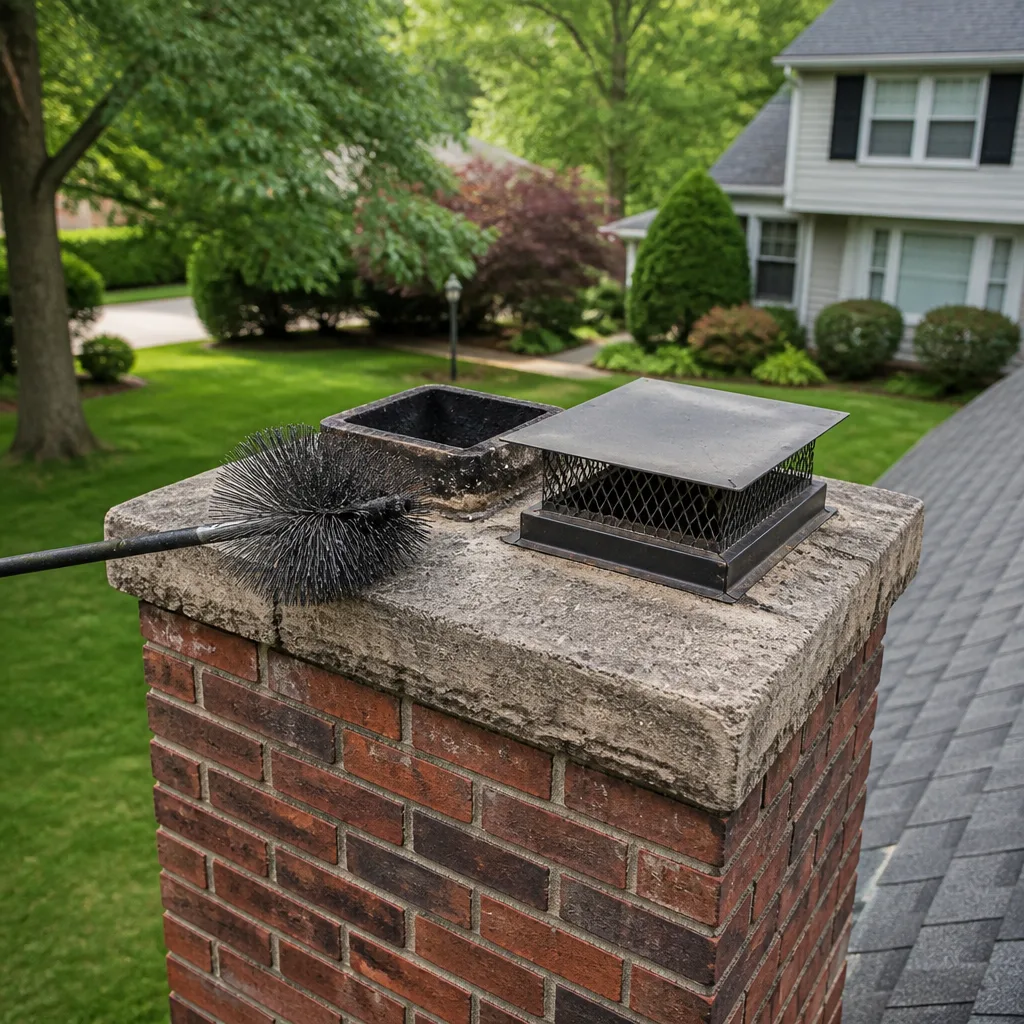
Chimney sweep logs do not sweep chimneys. They loosen some creosote - which then falls where a brush and vacuum still have to collect it.
 Before
 After
After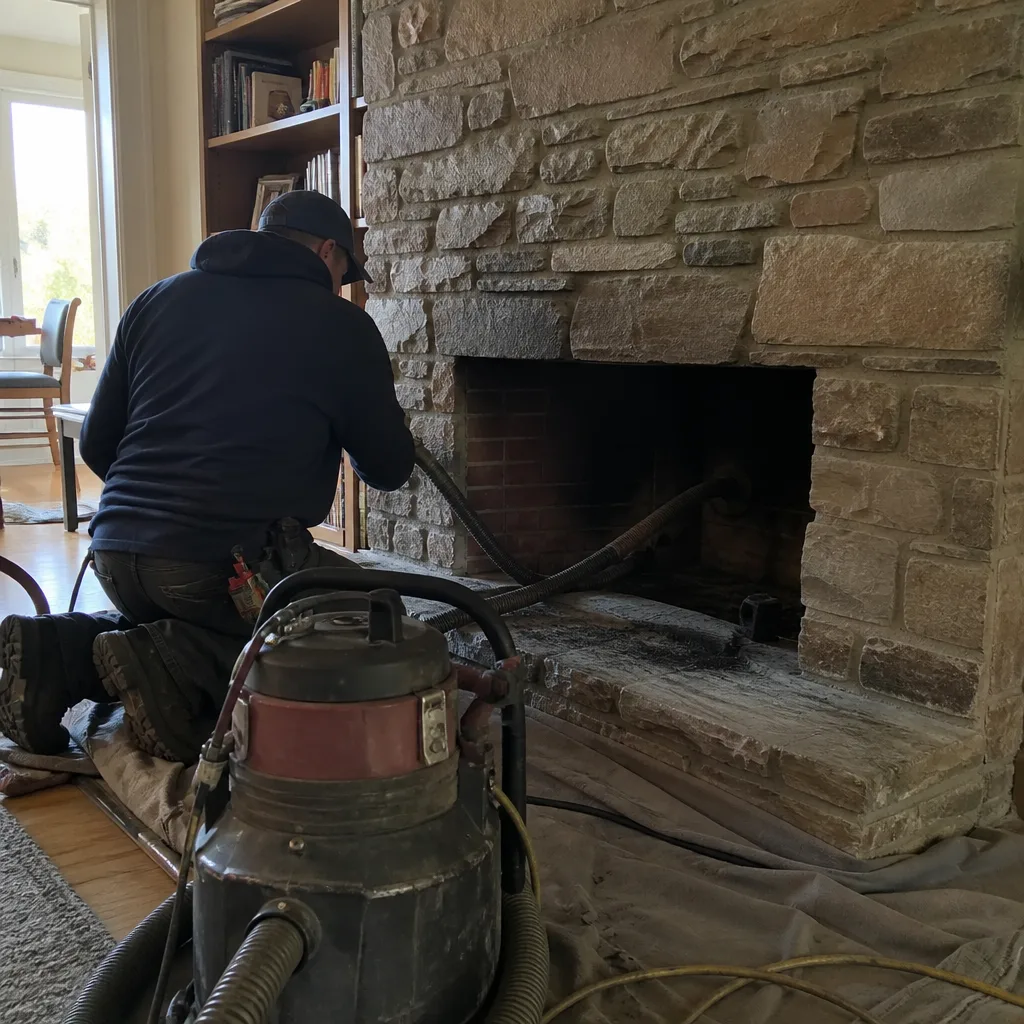 Before
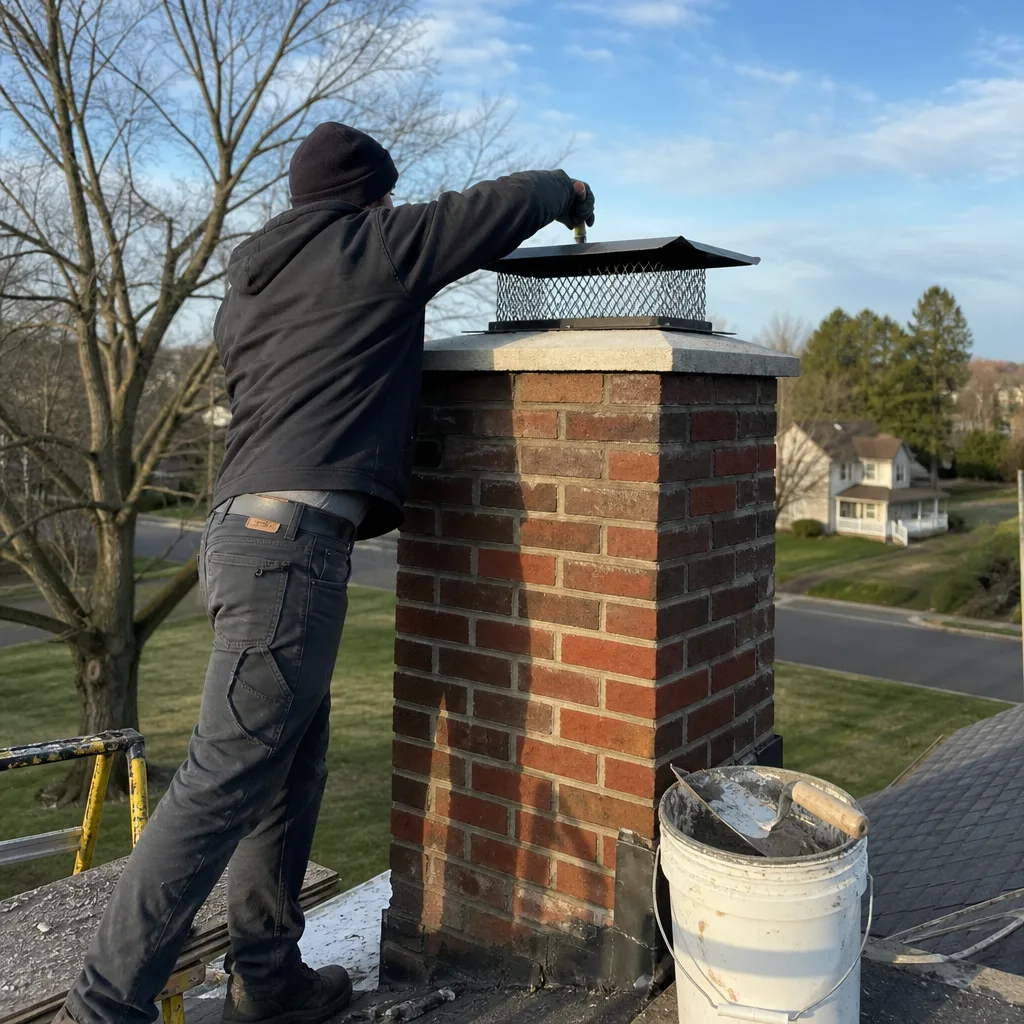 After
After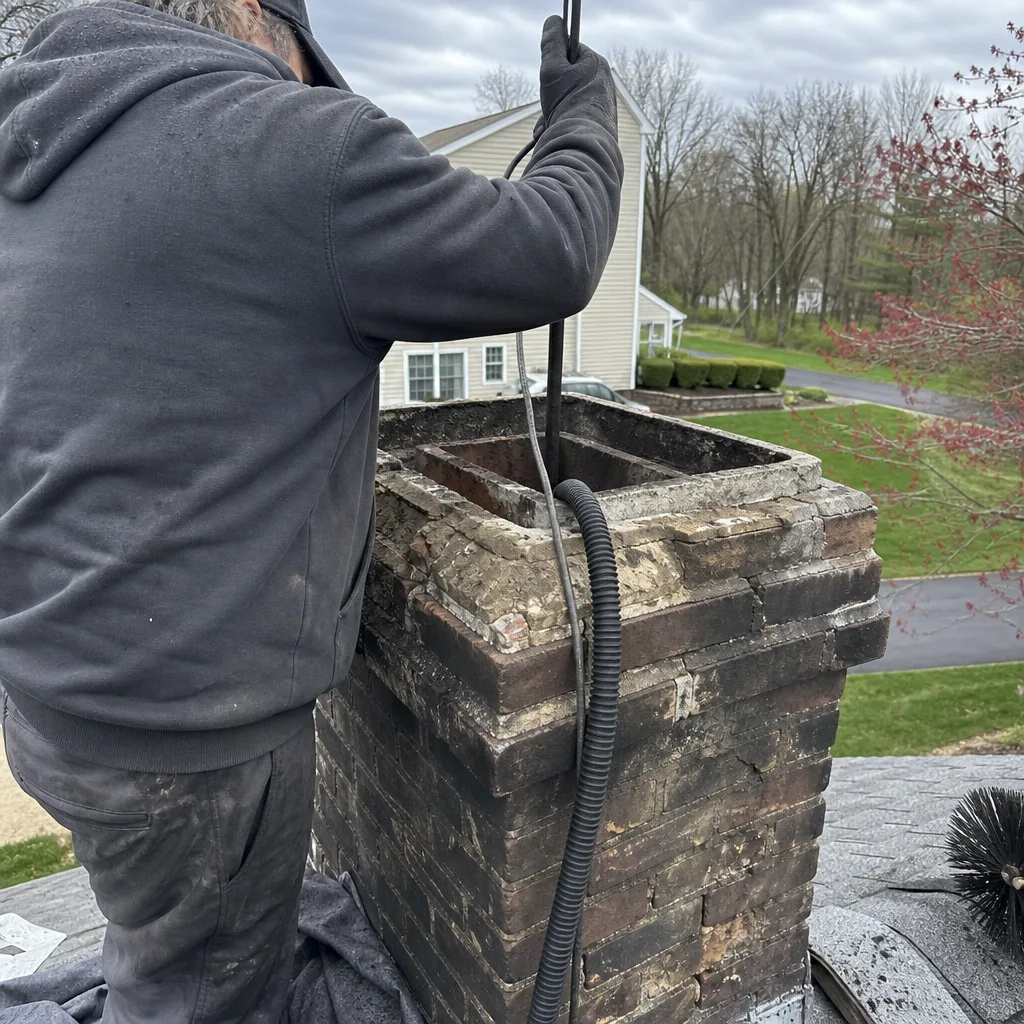 Before
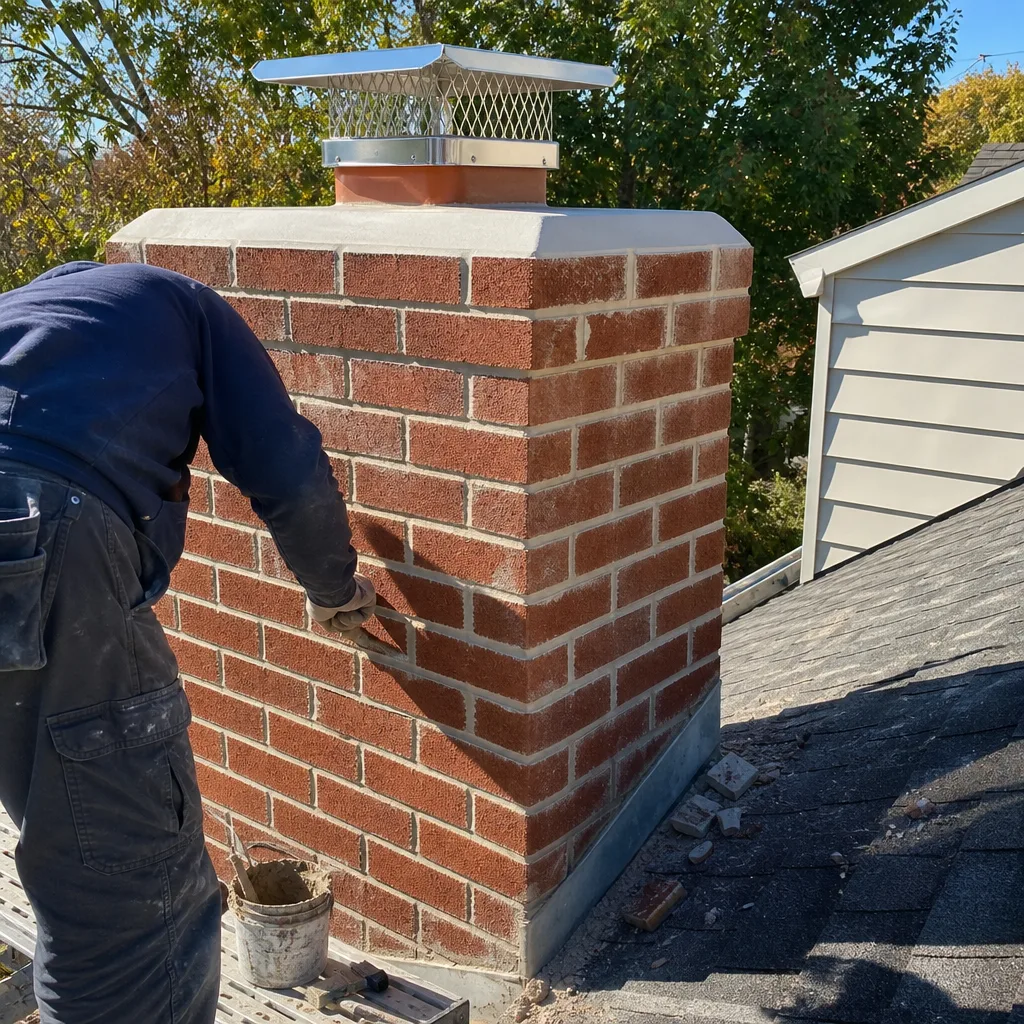 After
AfterChimney Cleaning & Sweep Maintenance Checklist for Doylestown Homeowners
Nine out of ten chimney maintenance checklists you’ll find online include items that require a camera on a 20-foot pole and the balance of a roofer. This one doesn’t pretend you have those. What it does is walk you through what a Doylestown homeowner can genuinely see from the ground, from the firebox opening, and from the top of a stepladder, then tell you plainly what those observations mean and when they’re actually a problem. You’ll learn what to check each season, how to keep a simple log that makes every future service call faster, and where the line sits between a task you can do yourself and something Wendell Pike has spent 29 years learning to do right.
Quick Answer
The most useful chimney maintenance checklist for a Doylestown homeowner has five parts: check your damper operation three times a year, inspect the firebox for cracked bricks and loose mortar twice a year, look at your cap and crown from ground level each spring, keep a written burn log, and schedule our Chimney Cleaning & Sweep services and inspection every year regardless of how often you burn. Most of the other items on popular checklists are tasks that require professional equipment and a trained eye, and doing them poorly gives you false confidence without making your chimney any safer.
Table of Contents
- What You Can Actually Check From the Ground and Firebox
- Seasonal Timing Tied to Bucks County’s Real Weather Calendar
- The Three Damper Checks Most Sweeps Never Mention
- Cap and Crown Condition: What to Look For With Binoculars
- How to Keep a Chimney Log That Makes Every Service Call Faster
- What a Professional Sweep in Doylestown Actually Includes
- Common Mistakes to Avoid
- When to Call a Professional
- Frequently Asked Questions
- The Bottom Line
What You Can Actually Check From the Ground and Firebox
Let’s be honest about what a homeowner can see. You don’t have a chimney camera. You don’t have a 40-foot ladder. You don’t have the training to know whether that dark staining is first-degree creosote that a brush will handle or third-degree glaze that’s baked onto the flue walls. So skip the pretend inspections and focus on the four things you can genuinely evaluate with a flashlight, a pair of binoculars, and your own two eyes.
The Firebox: What You’re Looking At
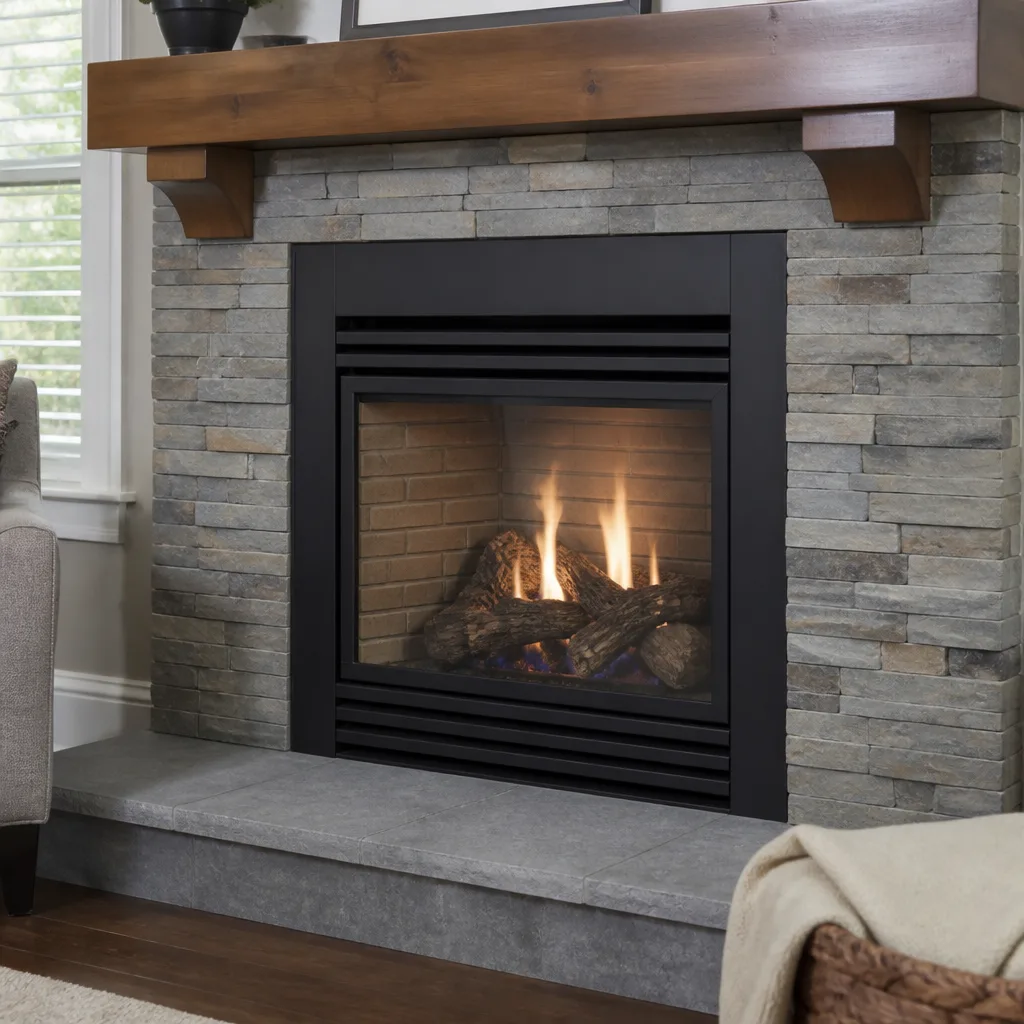
Open the damper, shine a flashlight up, and study the firebox. You’re looking for three specific things. First, cracked or spalled bricks. Spalling is when the brick face flakes off in layers, usually from years of heating and cooling cycles. A few hairline cracks are normal in a Doylestown fireplace that’s been through twenty winters. A brick that’s shifted or a gap you can fit a quarter into is not. Second, look at the mortar joints. Run your finger along a joint if you can reach it. If the mortar crumbles like sand, water has been getting in from somewhere. Third, check the area where the firebox meets the hearth. This is the most common spot for hidden damage in older Doylestown homes, especially the colonials and farmhouses built before 1960. If you see a gap there, or if the firebrick has pulled away from the wall, you’ve got a structural issue that needs a camera inspection, not a patch job.
The Flue Opening: What You Can and Cannot See
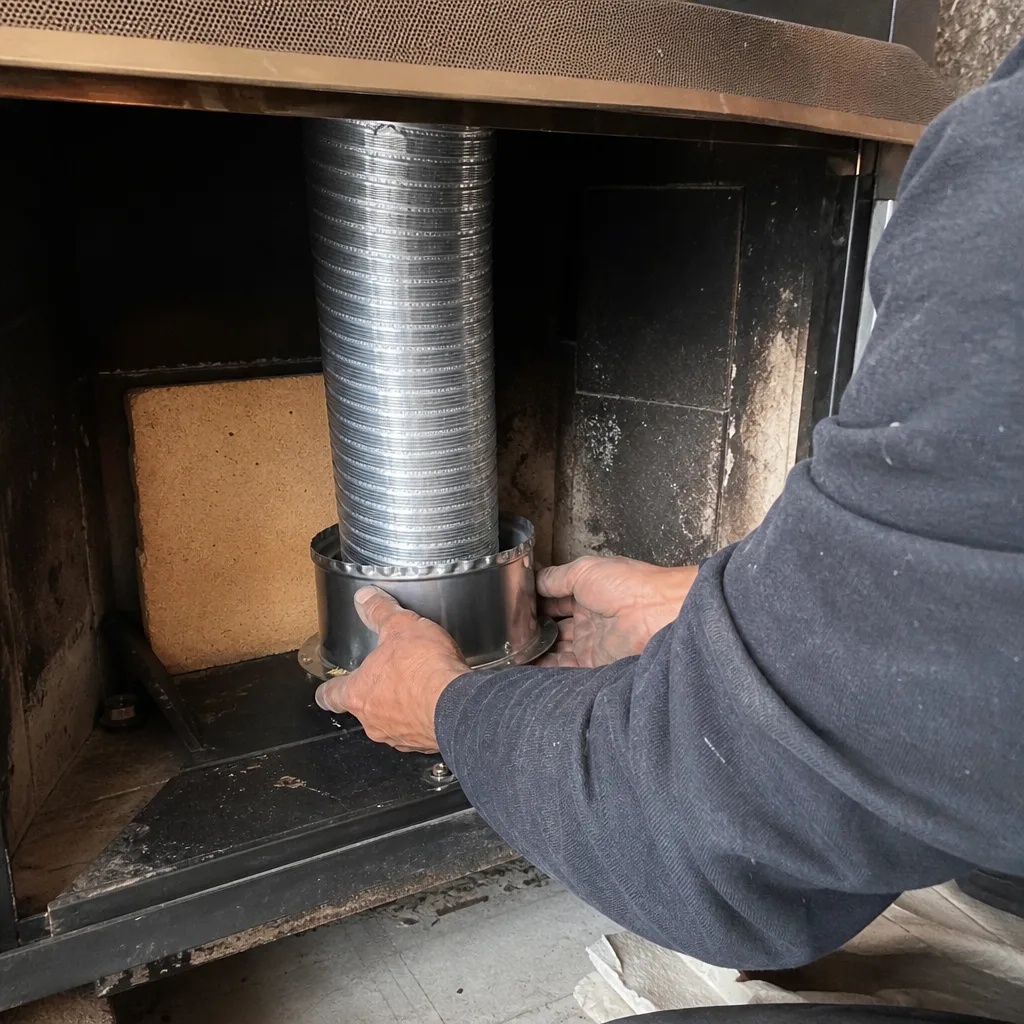
From the firebox, you can see maybe the first three feet of flue. That’s it. What you can check is whether there’s obvious blockage: a bird’s nest, a raccoon, a wad of leaves. What you cannot check is creosote buildup higher up, cracked flue tiles, a disconnected liner, or a hidden void behind the masonry. Those require a chimney camera. Anyone who tells you they can fully evaluate a flue from the firebox with a flashlight is either guessing or selling something. At Top Hat Chimney home service standards, we run a camera on every inspection, no exceptions, and we show you the footage before we recommend anything. If a sweep won’t show you the camera, ask why not.
What Those Observations Actually Mean
- Loose mortar in the firebox: usually means water intrusion from above, often a failed cap or crown. Fix the water path first, then repoint.
- Shiny black or tar-like residue in the first few feet of flue: that’s creosote, and if it’s glossy that’s second or third degree. Don’t burn another fire until it’s been evaluated.
- White staining on the bricks: that’s efflorescence, which means water is passing through the masonry. It’s a symptom, not the disease.
- Rust on the damper or firebox tools: usually damp air flowing down the flue. A top-sealing damper often solves the draft and the rust.
- A smell like asphalt or burnt barbeque when it rains: water is hitting creosote. That smell is a warning sign, not just an annoyance.
For homeowners in Doylestown borough with older fieldstone chimneys, pay extra attention after heavy rain. The borough’s older housing stock often has unlined or clay-tile lined flues, and those tiles crack with age. If your chimney is original to a pre-1960 home and has never had a liner inspection, that should be near the top of your list.
Seasonal Timing Tied to Bucks County’s Real Weather Calendar
Generic chimney advice says clean in the fall and inspect in the spring. That’s fine as far as it goes, but Bucks County’s weather doesn’t run on a generic calendar. Here’s what we tell Doylestown homeowners, season by season.
March Through May: The Real Inspection Season
In Doylestown, March is when freeze-thaw cycles do their worst. The temperature swings between 20 degrees at night and 50 in the afternoon, and any water that found its way into a crack or a porous brick during the winter will freeze, expand, thaw, and freeze again. That’s how small cracks become structural problems. By late March, the damage is done and visible. This is the time to walk around your chimney with binoculars and check the crown, the cap, and the upper masonry. Spring is also when birds and squirrels look for nesting spots in open flues. Check for nesting material around the cap. If you see twigs sticking out, a critter has moved in. It’s much easier to handle a nest in April than in October after a family of raccoons has spent the summer in there.
June Through August: The Off-Season Chimney Check
Your chimney breaks in the off-season too. Summer in Doylestown brings thunderstorms and humidity, and that’s when a small leak in the crown becomes a damp, musty fireplace, warped damper, and the distinct smell of a chimney that hasn’t dried out. On a dry day in July or August, do the firebox check described above. Open the damper, shine a light, look for water stains you haven’t seen before. If you do nothing else all summer, at least make sure the damper still opens and closes smoothly. A stuck damper in July is a nuisance. A stuck damper on the first cold night in November is a problem you’ll pay rush pricing to fix.
September Through November: The Burn-Season Prep
Get your professional cleaning done before you light the first fire, as outlined in The Complete Guide to Chimney Cleaning in Doylestown. In Doylestown, that first fire usually happens somewhere between late September and early November. If you book in August, you can pick your appointment time. If you call the week before Thanksgiving, you’ll wait. A professional sweep in Doylestown takes about 60 to 90 minutes for a standard open-hearth fireplace with a clean flue. If the flue hasn’t been swept in years, or if it’s a wood stove or insert, it may take longer. Budget two hours on your calendar and you won’t feel rushed.
December Through February: The Season of Watching
Once you’re burning regularly, watch for three things. Soot falling into the firebox mid-burn, smoke entering the room, or a fire that’s suddenly harder to start than it was in November. Any of those means the flue is not drafting properly, and the most common causes are creosote buildup, a blocked cap, or a cold flue-see Chimney Cleaning Warning Signs: A Doylestown Homeowner’s Reference Guide for details. Cold flues are common in Doylestown because many of our chimneys run up the outside wall of the house, not through the center. An exterior chimney cools down between fires, and a cold flue pushes smoke down instead of up. If you preheat the flue by holding a lit roll of newspaper up near the damper for thirty seconds before you light the main fire, you’ll usually solve that. If that doesn’t work, you’ve got bigger draft issues and should get the flue camera-inspected.
The Three Damper Checks Most Sweeps Never Mention
The damper is the most important moving part in your fireplace, and most homeowners only think about it when it sticks. Here are three damper checks you can do in under five minutes that will catch problems months before they become expensive. We’ve spent 29 years working on Chimney Repair in Doylestown jobs, and damper failure is one of the most common issues we find on older homes.
Check One: The Full-Travel Test
Open the damper as far as it will go. Count how many turns of the handle or pulls of the chain it takes. Now close it completely. It should move smoothly through the full range and seat firmly when closed. If it grinds, if you need pliers, if it stops halfway, or if it doesn’t close all the way, the damper is failing. A damper that won’t close all the way lets heated air from your house run up the flue all winter. A damper that won’t open all the way is a smoke and carbon monoxide risk. Do this test three times a year: once in spring, once in late summer, and once before your first fire.
Check Two: The Light-Ready Position
Here’s the one almost nobody checks. Open the damper fully, then close it one quarter of the way. That’s your cold-start position. A fully open damper on a cold Doylestown morning lets so much cold air drop into the firebox that your kindling has to work twice as hard. A quarter-closed damper reduces the cold-air drop while still allowing enough draft to get the fire going. Once the flue warms and the fire is burning well, open it back to full. If you’ve ever wondered why your fireplace smokes only on cold starts, this is usually the answer.
Check Three: The Light-Tight Test
In the daytime, close the damper completely and then get down low in the firebox and look up past the damper. You shouldn’t see any daylight. If you see light sneaking around the edges of a closed damper, the seal is worn, warped, or rusted. That gap is a highway for warm air in winter and cold air in summer, which is why some Doylestown living rooms stay drafty no matter how much the furnace runs. A worn damper can often be replaced with an energy-saving top-sealing damper that pays for itself in reduced drafts within a year or two. For a Fireplace Services in Doylestown call, ask us about the top-sealing option if your throat damper is shot.
Cap and Crown Condition: What to Look For With Binoculars
You don’t need to get on the roof to do a meaningful cap and crown check. You need a pair of binoculars and a dry day. Stand in your yard, about twenty to thirty feet from the house, and study the top of the chimney. Here’s what to look for.
The Crown
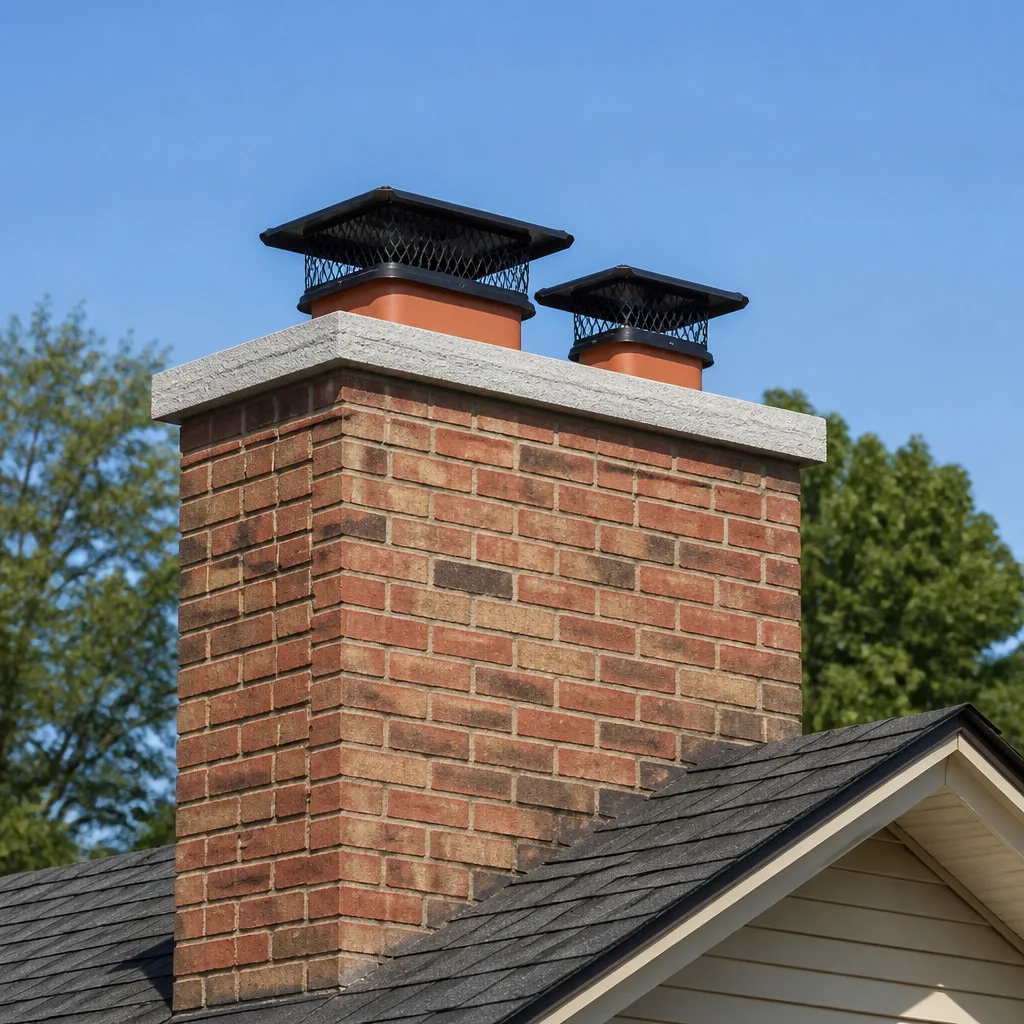
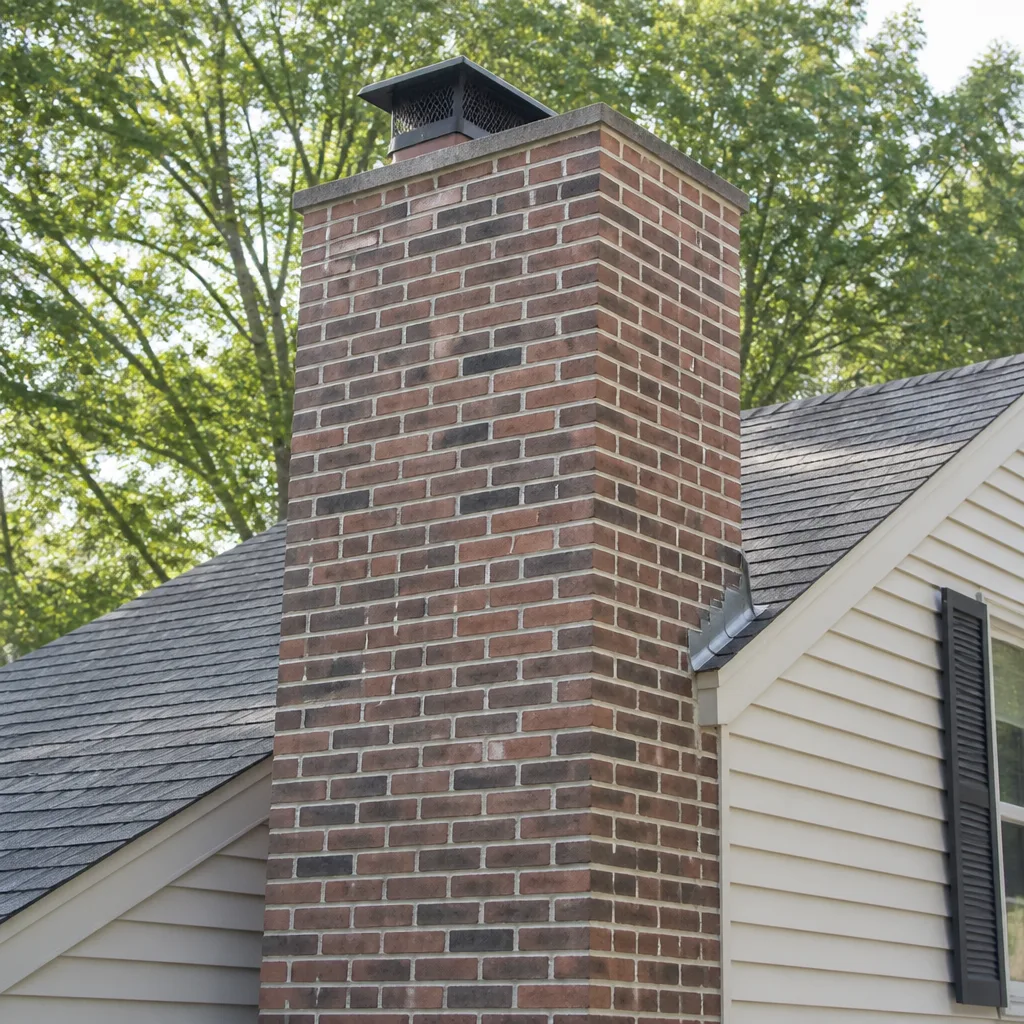
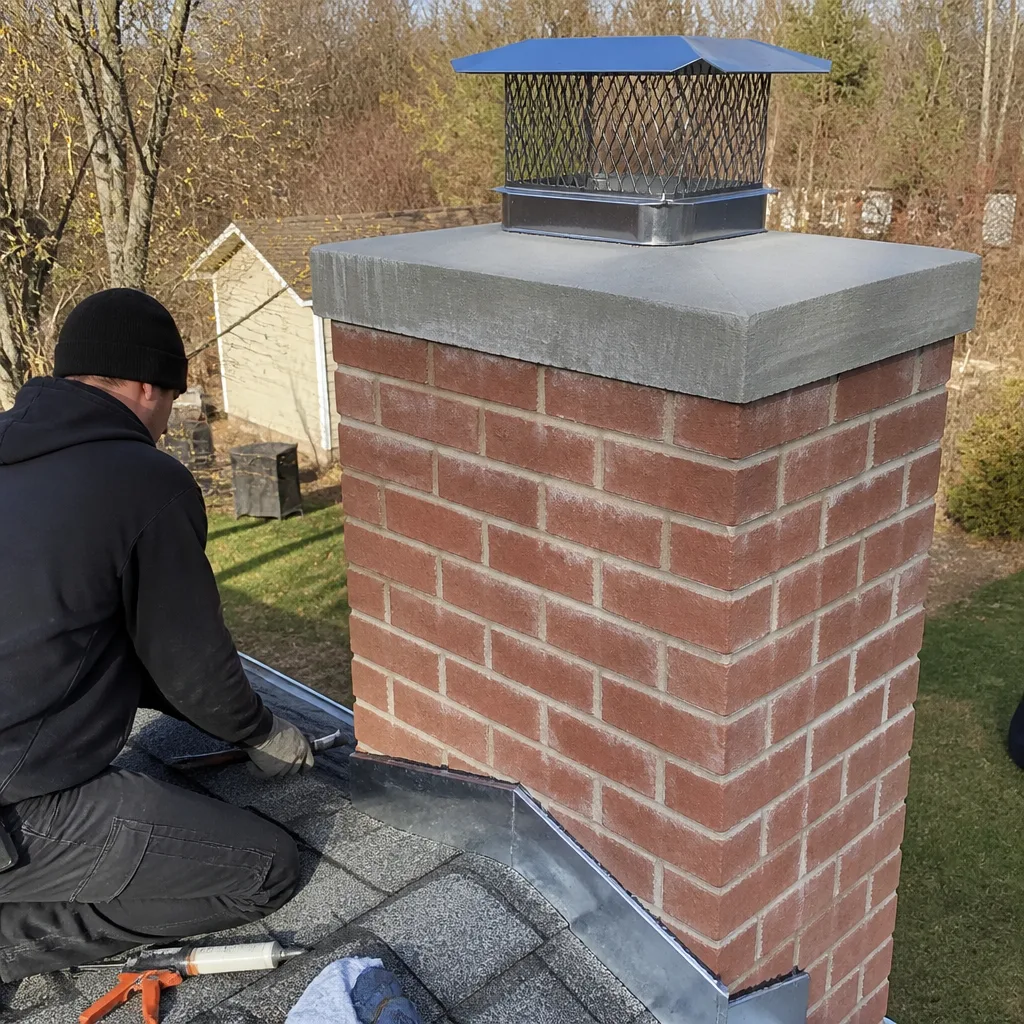
The crown is the concrete or mortar slab that caps the top of the chimney structure. It sheds water away from the flue. On Doylestown homes with chimneys built before the 1990s, this is often a simple mortar wash, which cracks easily. Look for visible cracks wider than a pencil line, missing chunks, or a crown that’s pulling away from the flue tile. Also check whether the crown has a drip edge; that’s a slight overhang that keeps water from running straight down the brick face. If your crown is cracked or missing its drip edge, water is getting into the chimney structure every time it rains. A cracked crown is usually repairable for a few hundred dollars. If you wait until the crown fails completely and the top few courses of brick are spalled from freeze-thaw, you’re into a masonry rebuild that costs several times more. In Doylestown, where we get an average of 48 inches of precipitation a year spread across all four seasons, crowns take a beating.
The Cap
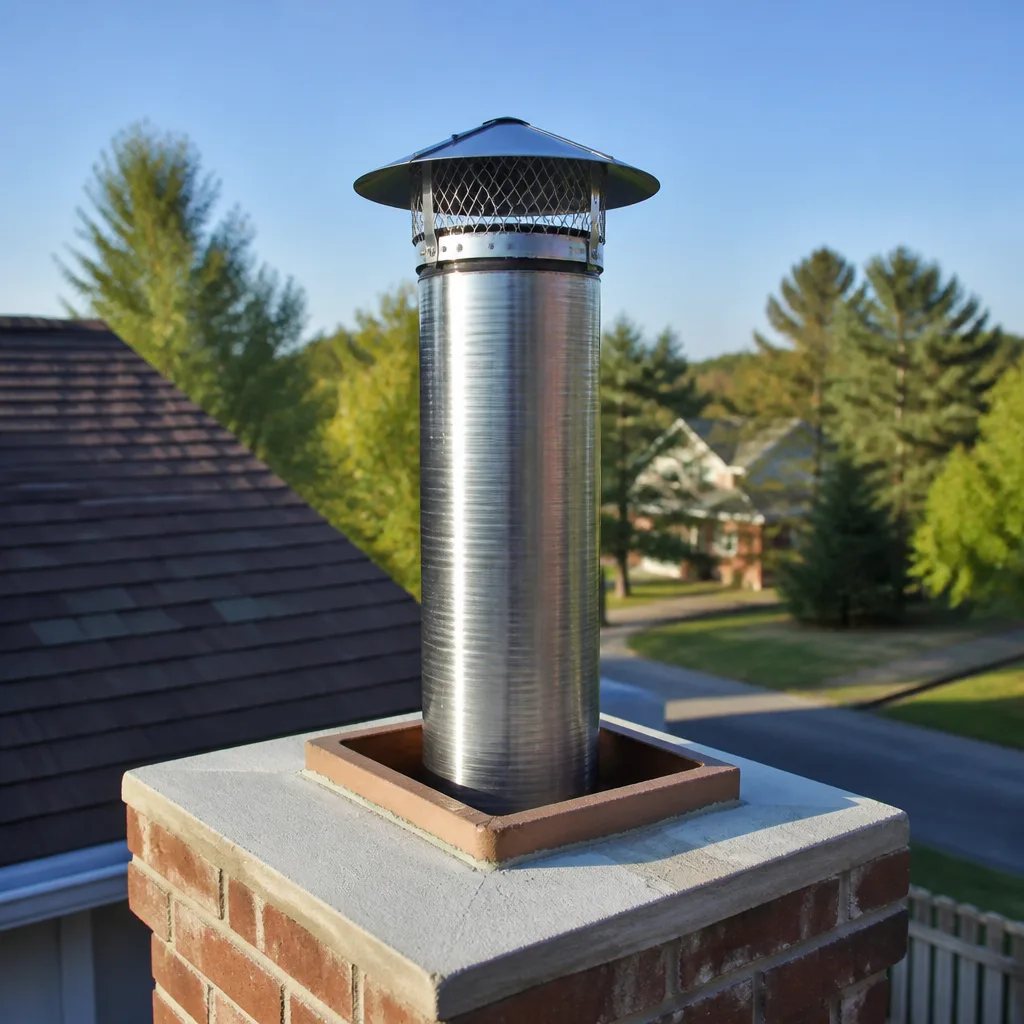
The cap is the metal or masonry roof over the flue opening itself. It keeps rain, snow, birds, and raccoons out. Look for rust through, missing screws, a cap that’s blown askew, or mesh screening that’s torn or pushed up. A torn screen is an open invitation to nesting animals. A cap with the mesh pushed up from underneath means something already tried to get in. If your cap is missing entirely, water is falling straight down onto your damper, which will rust it out in a season or two. Products from Chimney Cleaning & Sweep in Doylestown brands like Olympia Chimney and Famco hold up well to Bucks County weather, and a good stainless cap should last 15 to 20 years. If you’re replacing one, get a lifetime-warranty stainless cap. The cheap painted ones rust through in three years.
The Masonry Below the Crown
While you have the binoculars out, scan the top two feet of the chimney structure. Look for brick faces that have spalled, mortar joints that have washed out, or a chimney that’s visibly leaning. A slight lean might just be settlement, but it can also be a sign that the chimney foundation or the upper masonry has been compromised by years of water intrusion. If your chimney leans more than an inch or two over its height, call for an evaluation. That’s not a fix-it-yourself scenario.
How to Keep a Chimney Log That Makes Every Service Call Faster
Here’s the tool that costs nothing and saves you real money over time. A chimney log is a simple record of what you burn, when you burn it, and what you’ve had done to the chimney. When a sweep in Doylestown shows up at your door and you can hand him a one-page history, the inspection goes faster, the diagnosis is more accurate, and you don’t pay for exploratory time. Here’s how to keep one.
What a Professional Sweep in Doylestown Actually Includes
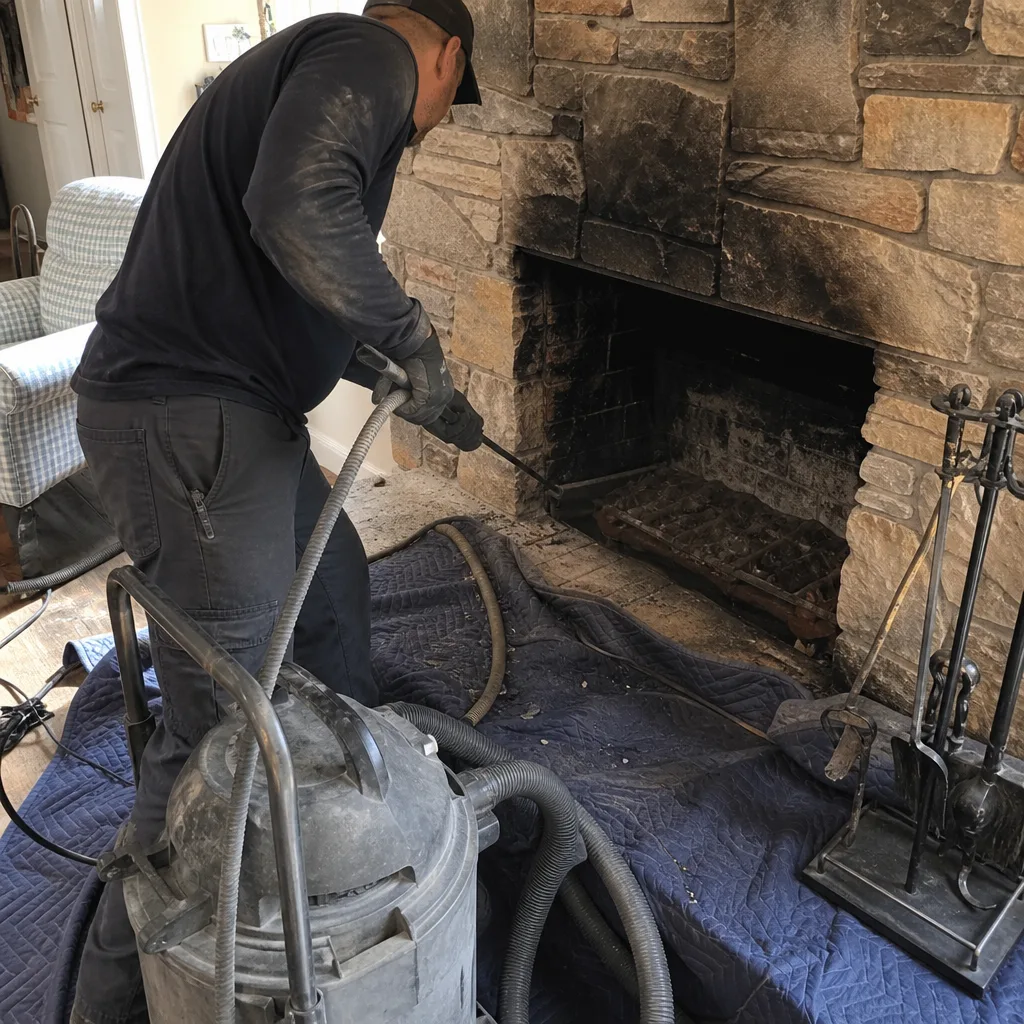
A professional chimney cleaning in Doylestown is not just running a brush up and down a flue. When Wendell Pike shows up for a sweep, here’s what’s happening. First, the floor and hearth area are protected with drop cloths and a HEPA vacuum runs the entire time to keep the soot out of your living room air. Second, the flue is brushed with the right size and type of brush for your specific liner, whether that’s a clay tile, a stainless liner from DuraFlex, or an unlined masonry flue. Third, the smoke chamber and smoke shelf above the damper get attention, because that’s where creosote falls and accumulates, and it’s the spot most often skipped by hurried sweeps. Fourth, the damper is checked and the firebox is cleaned out. And finally, if you’ve asked for it or if the brushing reveals anything unusual, the camera goes up and you get to see the footage. This matters. A Doylestown homeowner calling Chimney Cleaning & Sweep in Doylestown gets a set of eyes on the inside of the flue, not a guess.
Every job we do comes with the 90-Day Done Right Promise in writing: if it’s not done right, one call brings Wendell back. That’s not a sales pitch. It’s a guarantee that’s been stamped on every invoice since 1999.
Common Mistakes to Avoid
- Burning green or unseasoned wood. Wood that hasn’t dried for at least 12 to 18 months creates more creosote than seasoned wood, and in Doylestown’s humid summers, wood stored outside without a cover never really dries. Burn dry wood, and you’ll extend the time between cleanings.
- Using the fireplace as a trash incinerator. Burning paper, cardboard, wrapping paper, or pizza boxes creates fast, hot fires with high creosote production and embers that can escape the flue. Only burn dry, split hardwoods like oak, hickory, or maple.
- Assuming a new house means a clean flue. We’ve chimney-swept Doylestown homes that were built five years ago and found cracked flue tiles from thermal stress. Construction quality varies, and builders don’t clean the flue before you move in. Every homeowner should get a camera inspection before their first burn, regardless of house age.
- Waiting until the smell appears. If you smell a campfire smell in the house on a rainy day, the creosote has already built up enough that water is activating the odor. By the time you smell it, you’re overdue.
- Cleaning the chimney yourself with a cheap brush from the hardware store. Homeowner brush kits don’t reach the parts of the flue that matter, they don’t inspect for cracks or liner damage, and on steep Doylestown roofs they put you at risk of a serious fall. It’s a false economy.
- Skipping the annual inspection because you only burned a few fires. Chimneys break in the off-season too. Water, freeze-thaw cycles, and nesting animals don’t care how often you used the fireplace last year. Once a year, burn or no burn.
When to Call a Professional
Call a professional if you see shiny black creosote in your firebox or flue, if you smell smoke or campfire odor when the fireplace isn’t in use, if your damper won’t open or close, if you see cracked bricks, loose mortar, or a leaning chimney, or if you haven’t had the flue inspected in more than twelve months. If water enters the fireplace during rain, call before the next freeze-thaw cycle can widen the crack. Top Hat Chimney offers free estimates in Doylestown. Call (484) 600-2977 to schedule. We’ll show up on time, give you upfront pricing before any work begins, and leave your house cleaner than we found it.
Frequently Asked Questions
Once a year, burn or no burn. The National Fire Protection Association recommends annual inspection, and annual sweeping is the standard for homes that burn any wood at all. If you burn more than two cords a season, you may need a mid-season sweep. Call (484) 600-2977 for an exact recommendation based on your usage.
A standard chimney sweeping in Doylestown typically runs between $180 and $350 depending on the flue type, animal nests, creosote level, and whether a camera inspection is included. Top Hat Chimney provides upfront pricing before work begins, and the number quoted on the phone is the number on the invoice. We also offer no trip charge inside our service county and 10% off always for seniors and veterans.
Maybe not. You need a camera inspection first. A cracked clay tile or a missing liner section is a fire hazard because it can allow heat to transfer through to flammable materials in the house framing. But not every homeowner with a damaged flue needs a full liner replacement. Products from HeatShield, DuraFlex, and Copperfield can sometimes be relined or resurfaced at a much lower cost. The only way to know is to look at the flue with a camera and see the footage yourself. A reputable Doylestown chimney company will show you the camera images before recommending a liner. If someone hands you a $6,000 liner quote without a camera inspection, get a second opinion. Top Hat offers free second opinions on written estimates.
You can, but you shouldn’t climb on your roof. Doylestown roofs can be steep, and chimney falls are a leading cause of homeowner injury. A brush kit from the hardware store will knock loose soot out of the flue, but it won’t remove hardened creosote, it won’t inspect the liner for cracks or disconnections, and it won’t tell you whether your cap is rusted through or your crown is failing. Professional sweeps use the right brushes, HEPA vacuums, and camera equipment. Call (484) 600-2977 and let a trained sweep with 29 years of experience handle it.
Creosote builds up. Creosote is flammable. A chimney fire burns at over 2,000 degrees, and by the time you know it’s happening, it may have already cracked your flue liner or ignited framing inside your walls. Even without a fireplace fire, skipped cleanings mean a narrower flue, reduced draft, smoke in the living room, rusted dampers, corroded masonry, and animal nests that block the flue entirely. The chimney sweep is cheap compared to what a chimney fire costs. Once a year, burn or no burn.
Bucks County and Doylestown follow the International Residential Code for chimneys, which requires a liner in good condition, proper clearances to combustibles, and a functional damper. If you’re buying or selling a home in Doylestown, the home inspector will flag chimney issues, and many real estate transactions require a chimney inspection. A pre-listing chimney sweep and camera inspection can prevent a closing-day surprise. Call (484) 600-2977 to schedule before the inspector does it for you.
The Bottom Line
A Doylestown chimney is not a set-it-and-forget-it feature. It needs an annual professional cleaning and inspection, a handful of simple homeowner checks that take minutes and cost nothing, and a chimney log that records what you burn and when. The homeowner checks draw the line honestly: you can inspect the firebox, test the damper, and use binoculars on the cap and crown. You cannot inspect the flue from inside the house, and no amount of internet reading or more guides & resources changes that. Your flue doesn’t care how the fire looks. It cares how it breathes. Once a year, burn or no burn. Call Top Hat Chimney at (484) 600-2977 for a free estimate in Doylestown. Wendell will answer or call you right back, and he’ll be the one in the truck.
Written by Wendell Pike, Owner at Top Hat Chimney, serving Doylestown since 1999.