
Last updated September 10, 2026
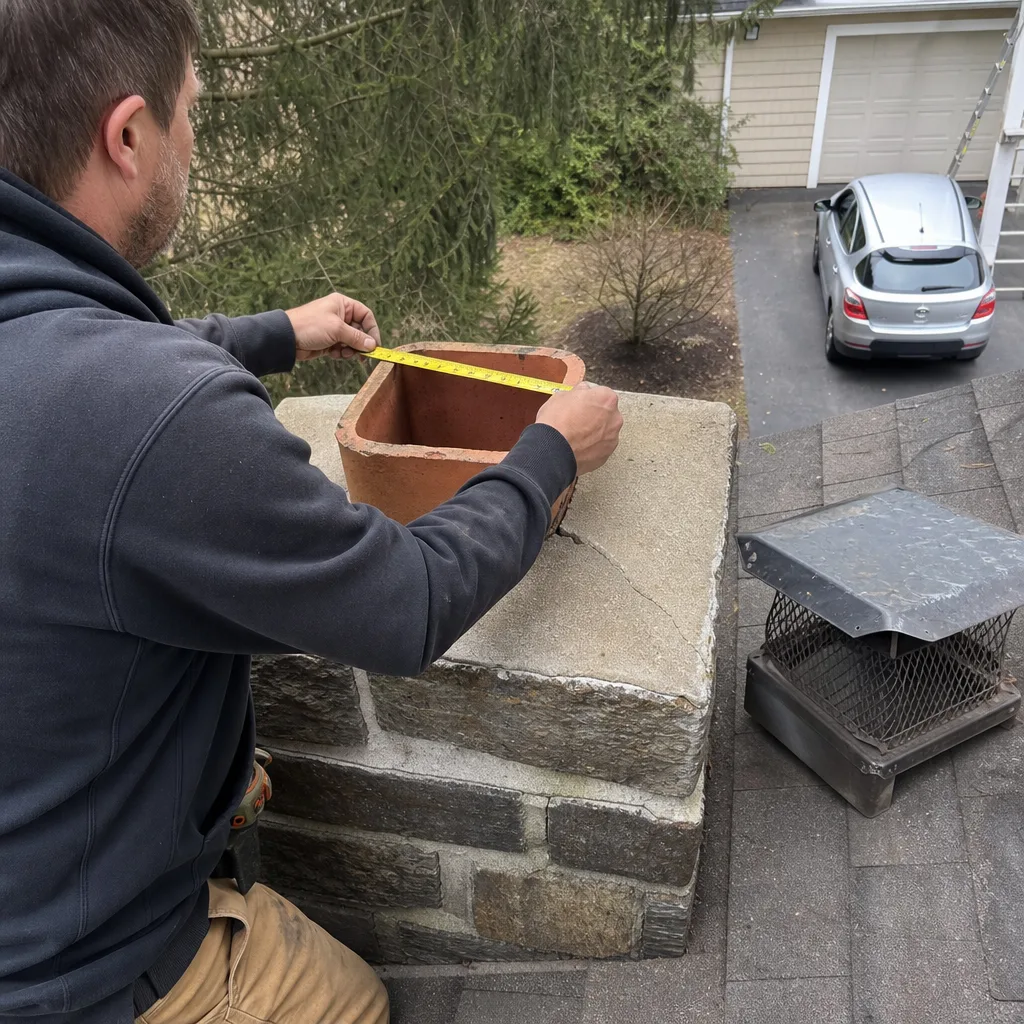
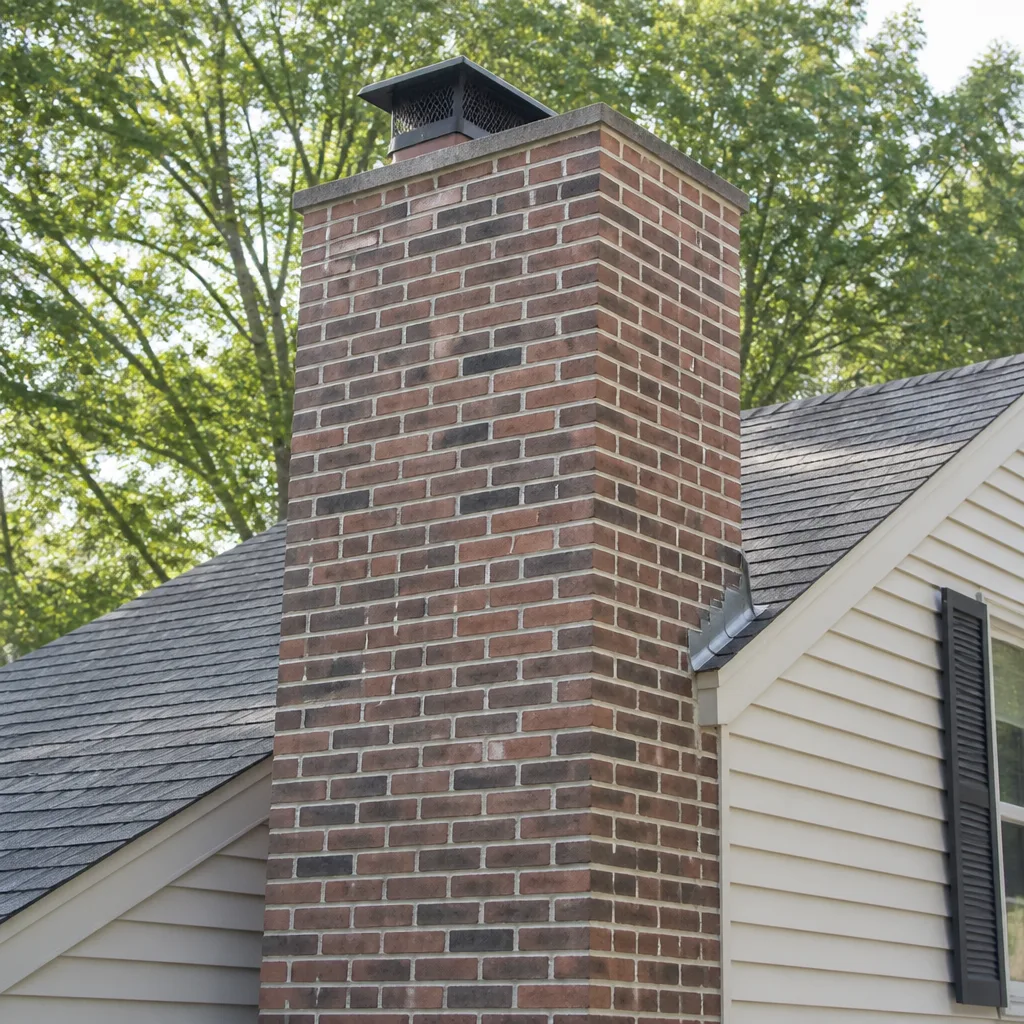
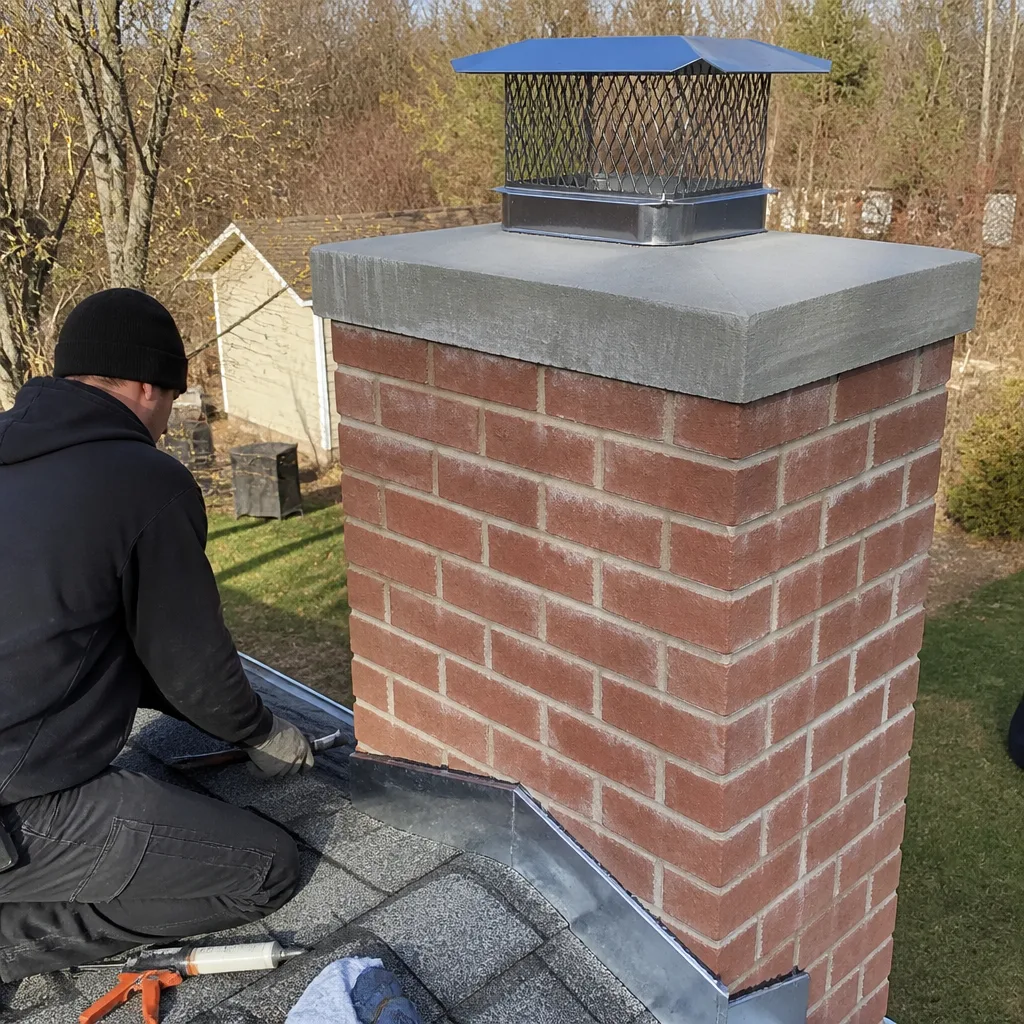
Level 1 sweep and inspection to the NFPA 211 annual standard - flue, crown, cap, and flashing checked and photographed
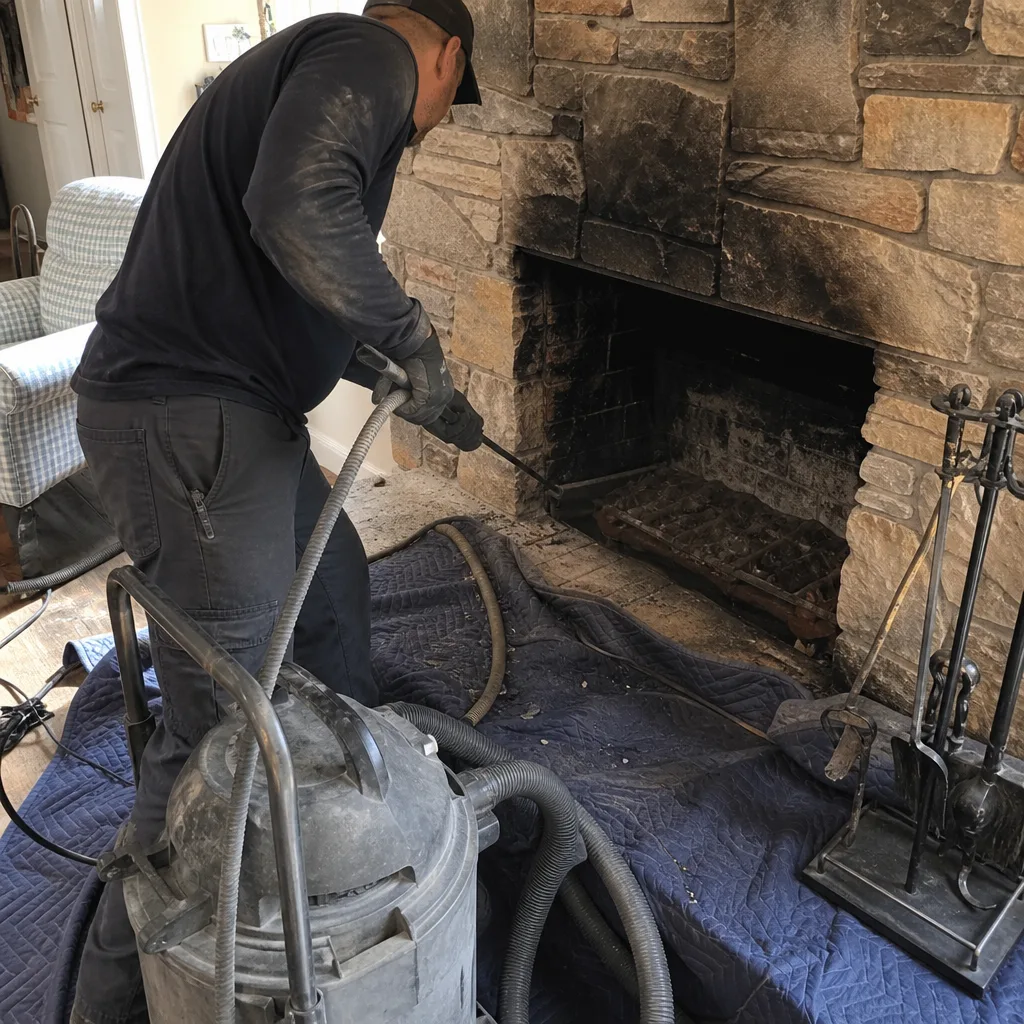
Chimney sweep logs do not sweep chimneys. They loosen some creosote - which then falls where a brush and vacuum still have to collect it.
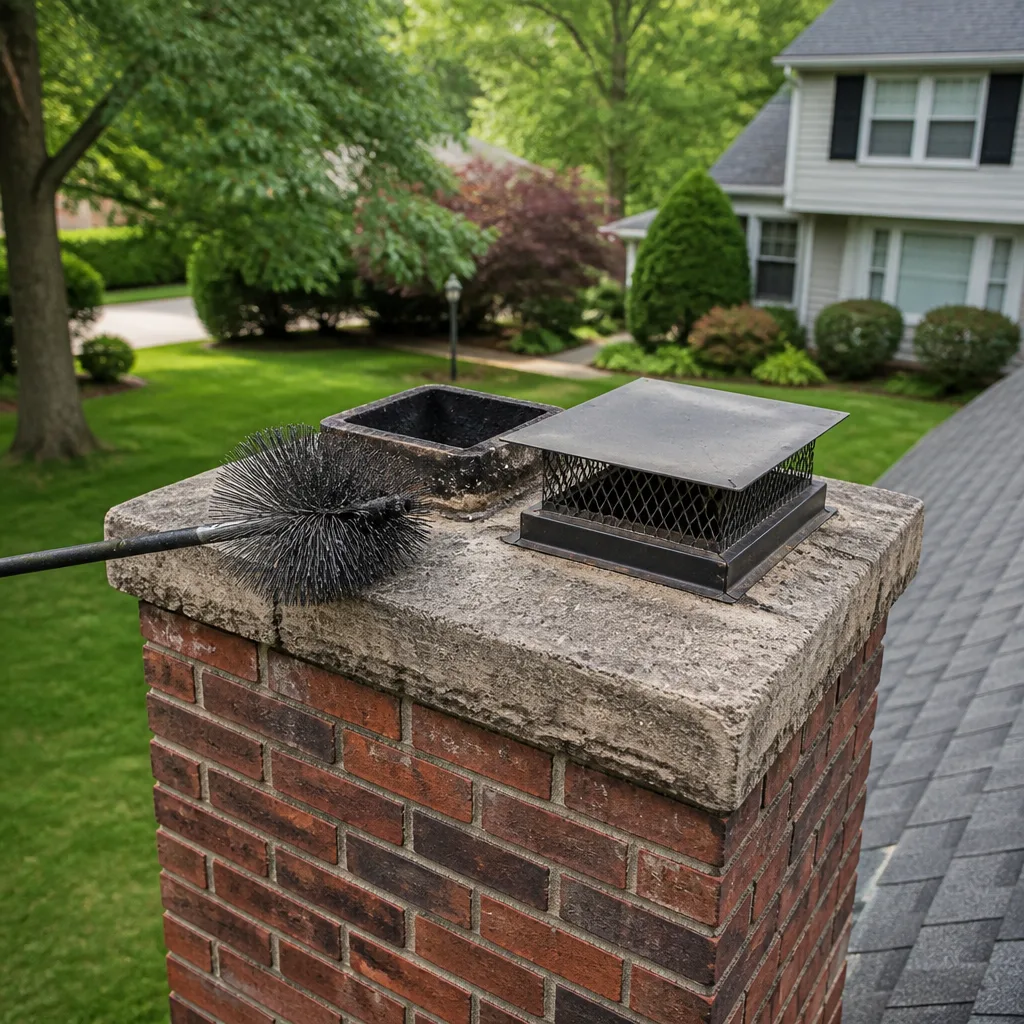
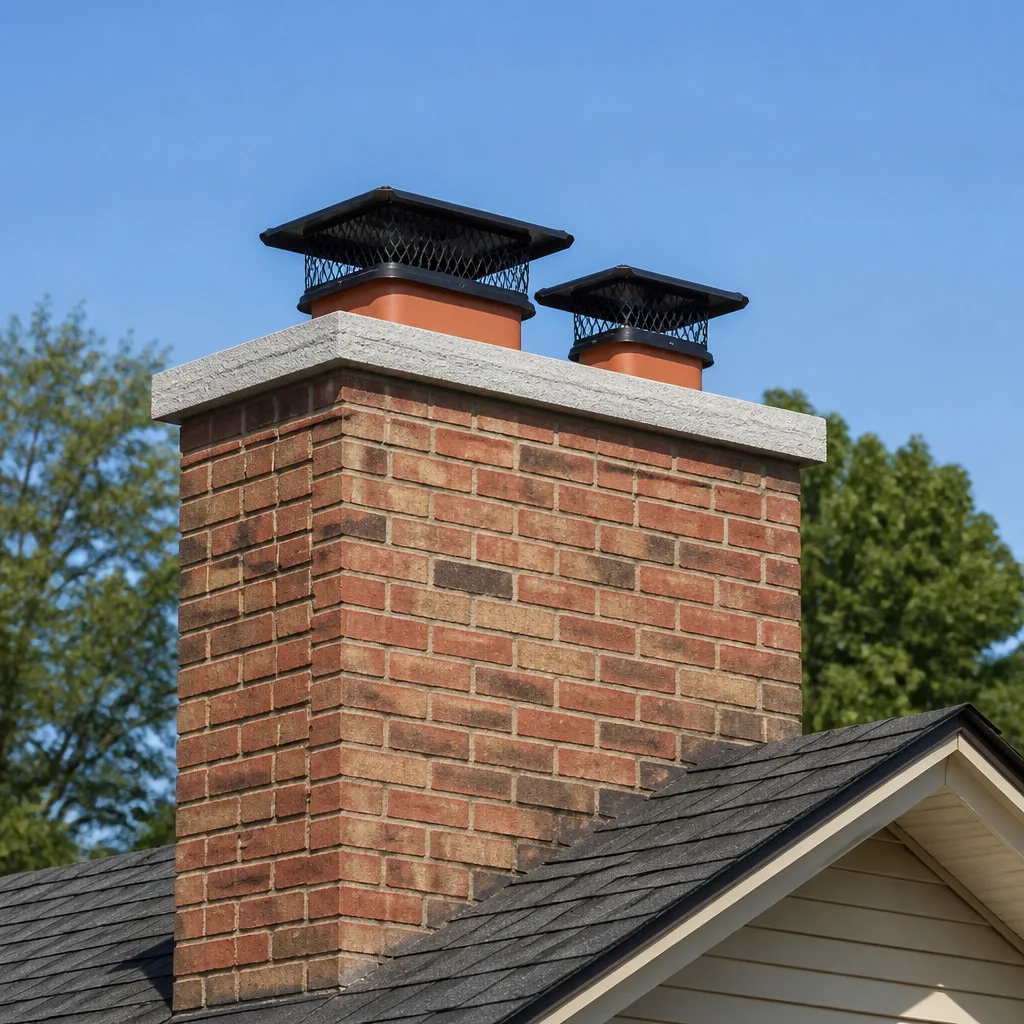
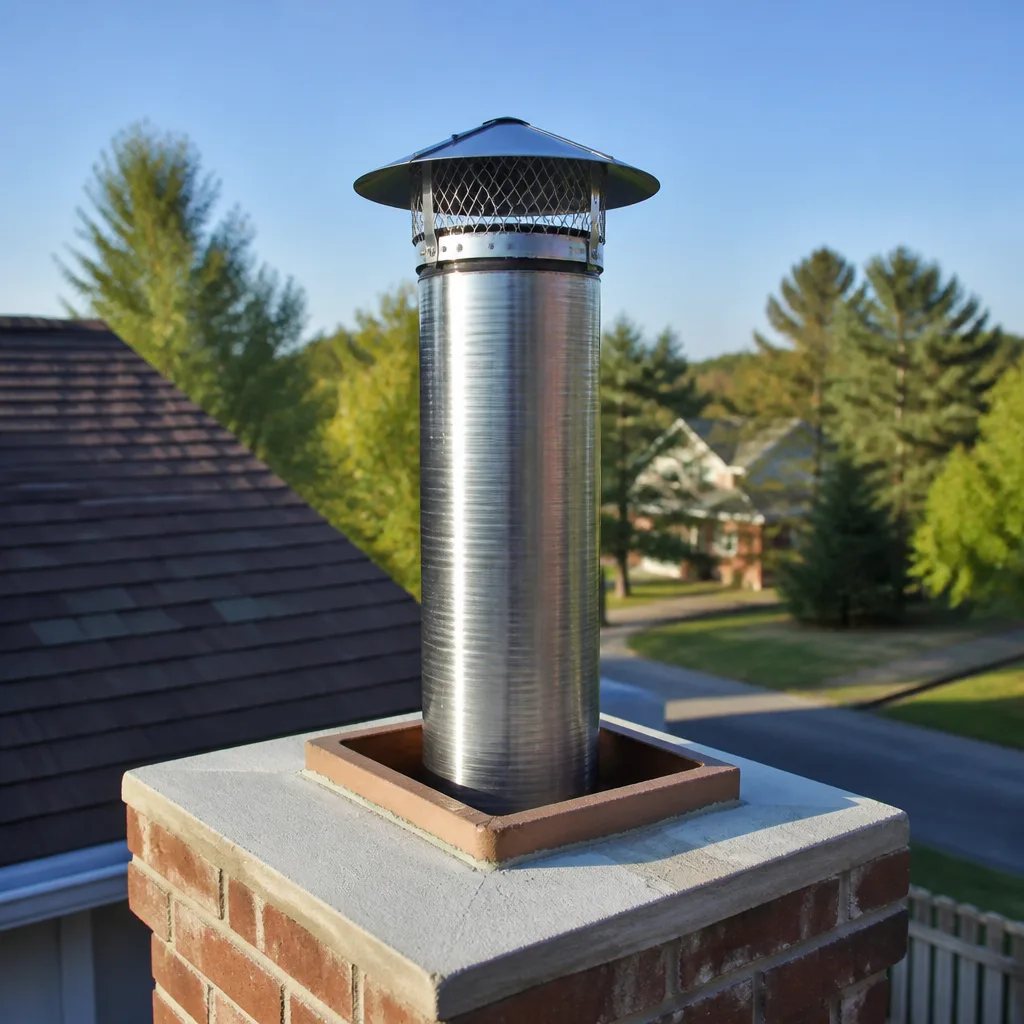
 Before
 After
After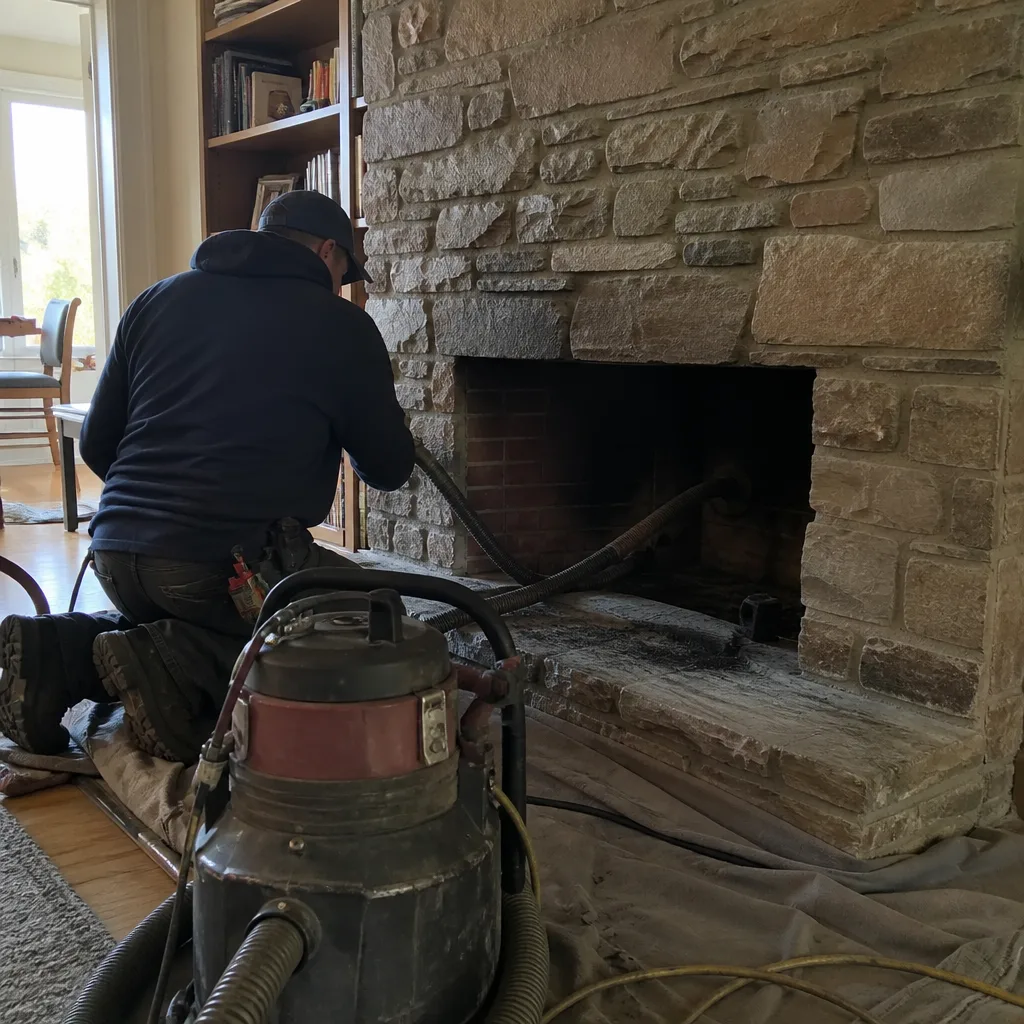 Before
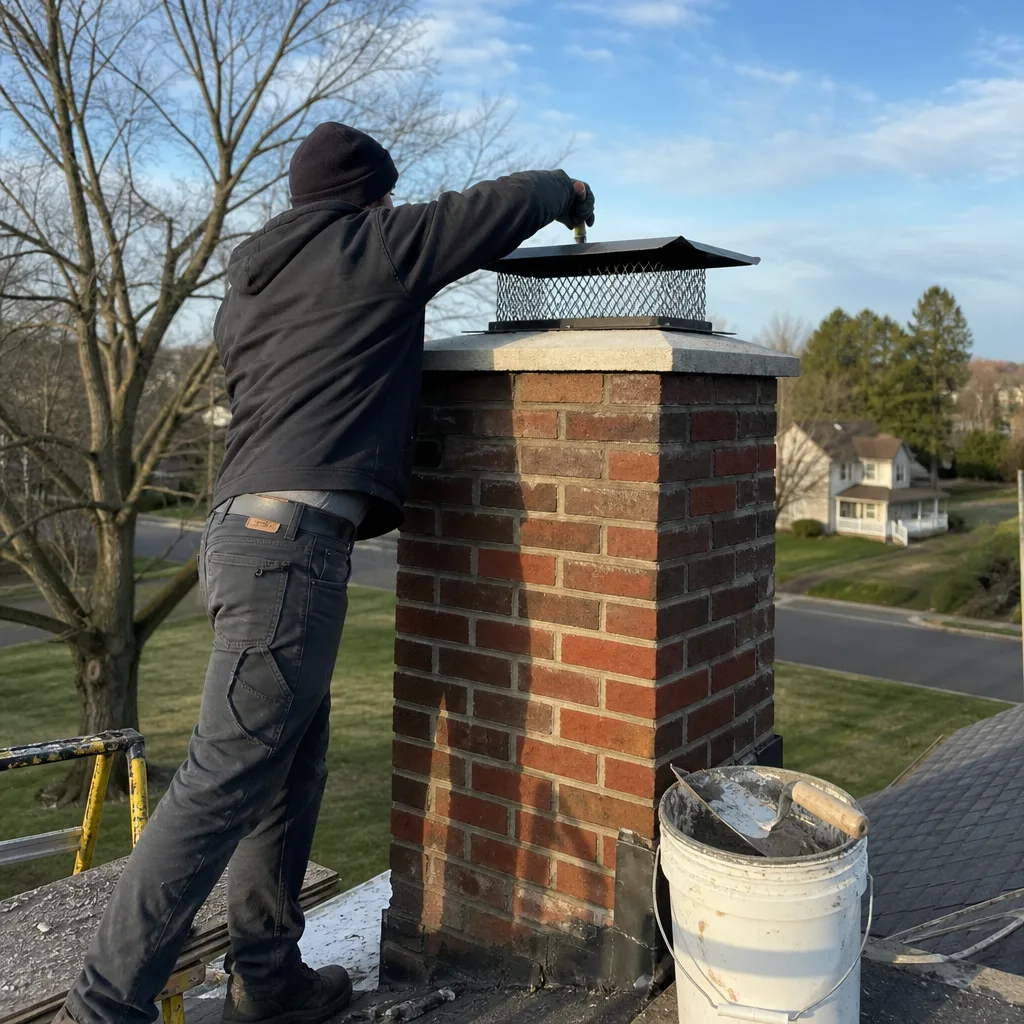 After
After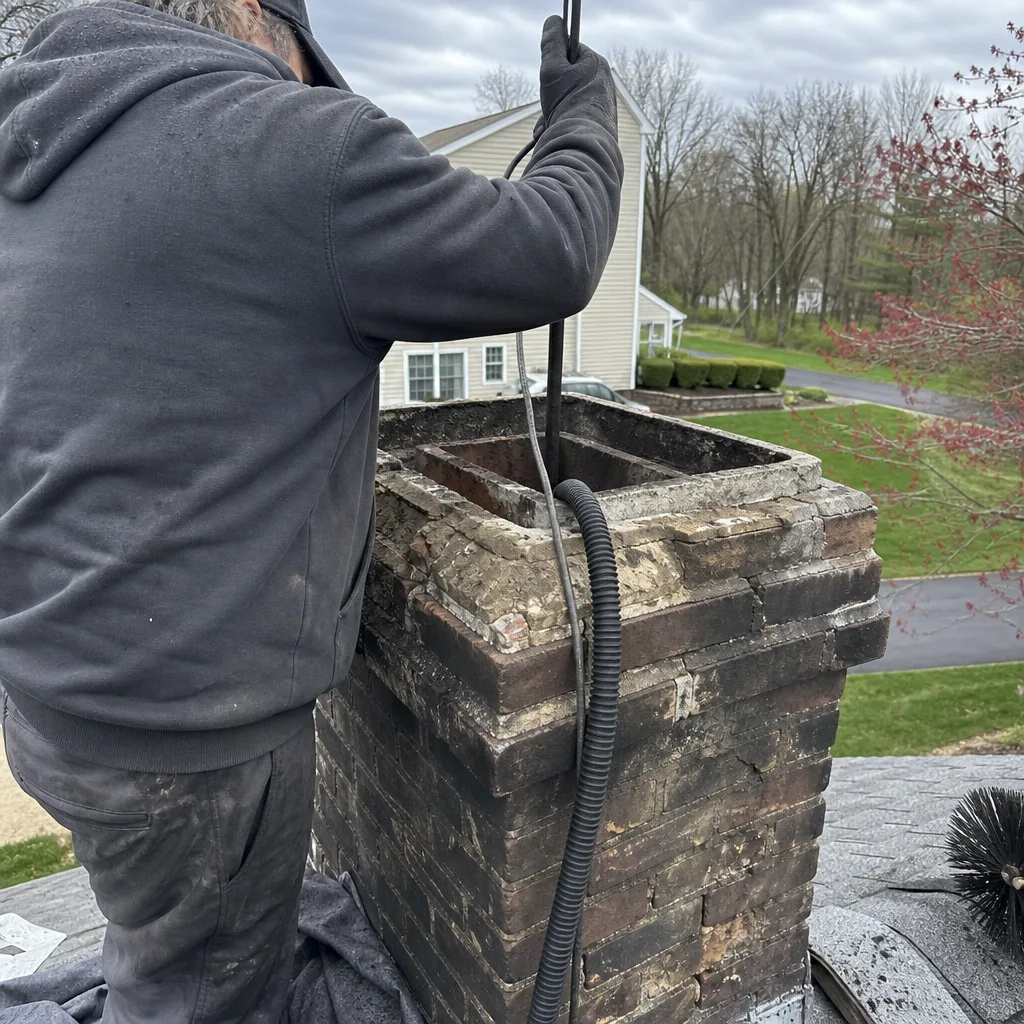 Before
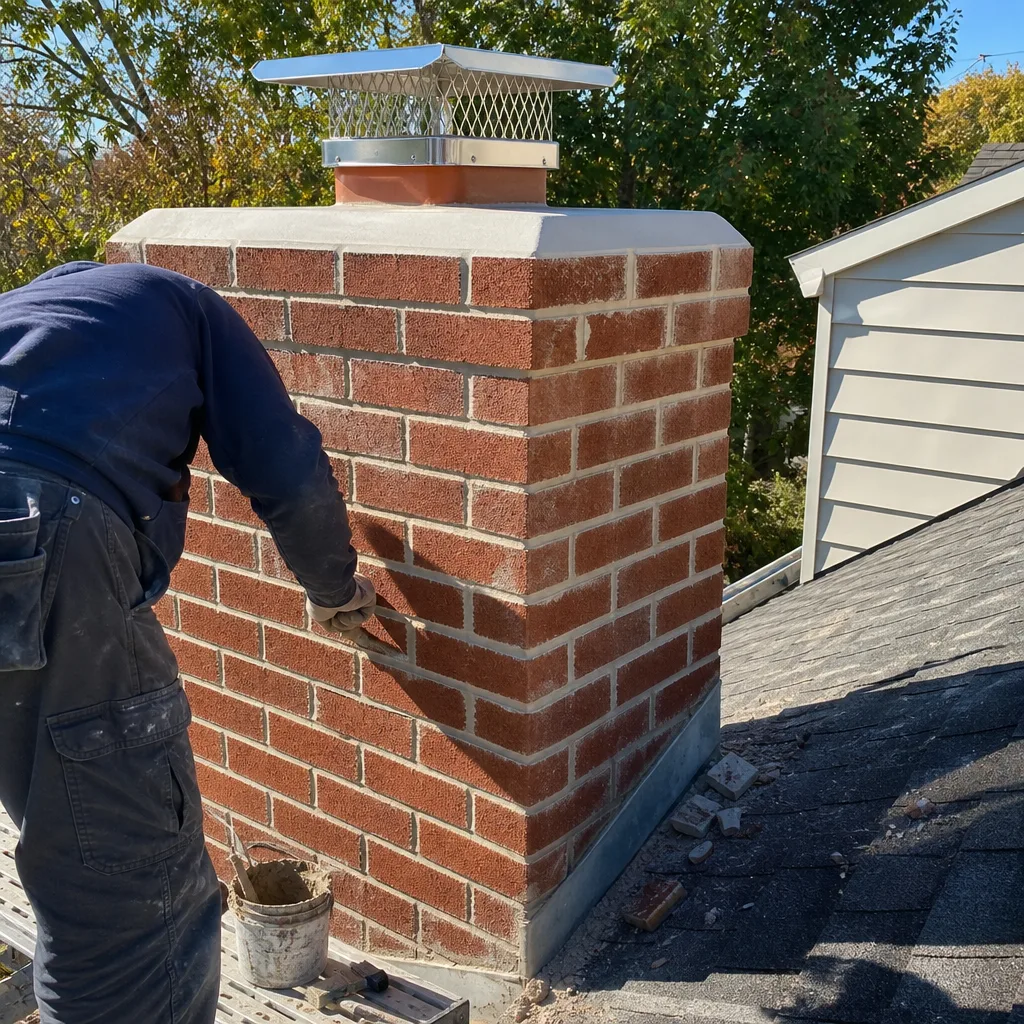 After
AfterDIY vs Professional Chimney Cleaning: The Doylestown Homeowner’s Decision Guide
If your chimney hasn’t been inspected in two years or more, here’s the number that matters more than any cleaning schedule: creosote builds fastest in the flues that seem cleanest from the hearth. We’ve opened chimneys in Doylestown that looked fine from below and carried a quarter inch of glaze six feet up. This guide will show you when a brush and a Saturday morning are genuinely enough, and when the work belongs in a truck with a camera on the end of a rod.
Quick Answer
You can safely clean your own chimney if you have a straight, single-story flue, a wood-burning fireplace without an insert or stove, and only first-stage creosote (the dusty, sooty kind, not the shiny or tarry kind). If your flue has bends, an appliance, a second-story roof pitch you’re not comfortable walking, or signs of glaze, oil, or a cracked liner, hire a pro in Doylestown. Most local sweeps charge $180 to $300 for a cleaning and full camera inspection.
Table of Contents
- The Honest Answer: When DIY Is Reasonable
- What a DIY Cleaning Actually Costs
- The Four Situations Where DIY Is Not a Gray Area
- What You Miss Without a Camera
- How to Do a Legitimate DIY Cleaning
- Why a Professional Cleaning Costs What It Does in Doylestown
- Common Mistakes to Avoid
- When to Call a Professional
The Honest Answer: When DIY Is Reasonable
I’ll tell you straight: if you have a straight, single-story flue, a wood-burning fireplace with no inserts, and first-stage creosote, you can probably clean it yourself and be fine. Here’s how to know if that’s actually your situation.
First, the house itself. In Doylestown, the classic scenario is a 1960s or 1970s colonial with a masonry chimney running straight up from a living-room fireplace; for year-round maintenance tips, see our Seasonal Chimney Cleaning Care for Doylestown: Year-Round Homeowner’s Guide. The flue may have a slight offset at the smoke shelf, but if you shine a flashlight up from the damper and see a mostly vertical tube, you have what a sweep would call a “straight shot.” That’s workable. What’s not workable is a flue that jogs sideways to serve a stove in a family room addition, or a two-story house where the chimney rises past a second floor. The taller the stack, the more rod length and ladder work you need, and the more you’re fighting gravity and balance with every brush stroke.
Second, the fuel. Wood fires in a simple masonry fireplace produce creosote that’s often brushable in the first stage: flaky, dark, maybe a little sticky if the fire burned cool. If you burn seasoned oak or maple, run hot fires, and the chimney gets cleaned reasonably often, you’re likely dealing with first-stage creosote. That’s what a brush handles. What a brush does not handle is the shiny, hard glaze that forms when a stove smolders or when green wood smolders overnight. That stage is a chemical or mechanical job, period.
Third, your own tolerance for heights and dust. Even a single-story flue means you’re on the roof. In Doylestown, a lot of single-story ranches still have a steep-enough pitch that a wet composite shingle gets slick fast. If you’re not comfortable kneeling at the chimney cap with a brush rod in both hands, that’s not a character flaw. That’s the line, and it’s fine to call us when you reach it.
Here’s the short version: there are three boxes to check. Straight flue, simple wood fireplace, first-stage creosote. If you can check all three honestly, you can clean it. If you can’t check any one of them, the DIY route is costing you more than the $200 you’d save. We’ve done chimney cleaning in Doylestown for over 29 years, and we’ve never once told a homeowner with a two-story offset flue to grab a brush and go for it.
What a DIY Cleaning Actually Costs
The internet makes DIY chimney cleaning sound like a $40 afternoon. The internet does not include the drive to three different stores when you realize your flue is 8×12 and every kit in stock is made for 6-inch round. Here’s the honest math for a first-time DIY cleaning in Doylestown.
You need a brush sized to your flue, not a universal one. If your flue is rectangular clay tile, an 8×12 brush runs about $35 to $55. Add four to six fiberglass rods, which run $10 to $15 each. A decent drop cloth that can handle fine soot, not just dust: $20. A shop vac with a HEPA filter kit, because a standard filter throws ash back into the air: $30 on top of the vac you probably already own. Rope, gloves, goggles, a basic respirator or at least an N95 mask: $40. A ladder tall enough to get you safely to the chimney cap: $150 to $250 if you don’t already own one. Total: somewhere between $300 and $400 on the first go.
Now compare that to a professional cleaning. In Doylestown, a standard sweep with camera inspection runs $180 to $300 depending on flue size, height, and how long it’s been since the last cleaning. The pro brings the brushes, rods, vacuum, and camera. He also brings experience reading what comes down, which is the part you can’t put a price on.
The financial picture only favors DIY on the second cleaning and beyond, once you own the gear. But here’s what no kit includes: the inspection. When we run a camera up a flue, we’re looking for spalling brick, cracked tile, missing mortar, animal damage, and liner deterioration. A brush does none of that. If your flue has a hidden problem and you skip the camera, the money you saved on the cleaning becomes a much bigger repair bill later. That’s not a sales tactic. That’s what chimney repair in Doylestown actually costs when a small crack becomes a liner rebuild.
DIY Cost vs. Professional Cleaning in Doylestown
- First-time DIY (buying everything): $300-$400
- Repeat DIY (gear already owned): $40-$60 for brush replacements and filter bags
- Professional cleaning with camera inspection: $180-$300
- What DIY never includes: inspection, creosote stage analysis, liner condition check, cap and crown assessment
Top Hat Chimney gives you the price before a single tool comes off the truck. No surprises at the door. The number you hear on the phone is the number on the invoice. That’s the way it’s been since 1999, and it’s the way it stays.
The Four Situations Where DIY Is Not a Gray Area
Some home projects have a judgment zone. Chimney cleaning has four situations where the answer is not “maybe” or “depends on your comfort level.” It’s no. Here they are, plainly.
1. Oil-Converted Systems
If your house was built with an oil furnace and the chimney was later converted for gas or wood, stop right there. Oil produces a sulfur-heavy soot that mixes with the masonry and changes the chemistry of any creosote that builds later. The residue is acidic enough to eat mortar joints, and brushing it stirs up particulates you don’t want in your lungs. A converted system needs a pro who knows what was burning in that flue before you were. We see these all over Doylestown’s older homes, especially in the borough where many 1950s oil tanks were swapped for gas lines decades ago.
2. Second-Stage Creosote
First-stage creosote is dusty and flaky. Second-stage is hard, shiny, tar-like, and it doesn’t come off with a brush. If you’ve shined a light up your flue and seen something that looks like black glass or road tar, that’s second-stage. Brushing it just polishes the surface while the fuel load stays put. The next hot fire finds it. Second-stage creosote needs mechanical removal with a rotary loop or chemical treatment followed by a professional sweep. And third-stage? That’s the glaze that looks like melted plastic. It’s a fire waiting for one hot burn.
3. Cracked or Deteriorating Liners
If you see chunks of clay tile in your firebox, or if you’ve noticed a widening crack in the chimney exterior, or if the mortar joints are turning to sand in the attic exposure, you have structural problems a brush can’t touch. A cracked liner lets heat and gases into the chimney chase and the framing around it. That’s how chimney fires become house fires. A camera inspection confirms a cracked liner. A brush run up a cracked liner sends the repair bill higher by knocking loose what was still holding together. When we find liner damage, we talk through options like HeatShield or a full liner install, and we show you the camera footage before we recommend spending a dollar.
4. Any Insert or Stove Appliance
A wood stove, a pellet stove, a fireplace insert: these pressurize the flue differently than an open fireplace. They burn hotter and longer, and they generate creosote in stages an open fire rarely hits. Cleaning an appliance flue means removing the connector pipe, accessing the appliance collar, and cleaning from inside the house, not from the roof. It means understanding clearance requirements and draft dynamics. It’s not a job for a homeowner with a brush kit, and nobody should pretend otherwise. If the previous owner put a stove in the living room of your Doylestown split-level, call us before you light it this fall, or read our How to Hire a Chimney Cleaning Contractor in Doylestown: A Step-by-Step Guide first.
What You Miss Without a Camera
The brush tells you one thing: how much soot came down. The camera tells you everything else. Here’s what you’re accepting when you skip the inspection.
First, the liner condition. Clay tile liners crack with age and with the freeze-thaw cycles Doylestown gets every winter from November through March. Water gets into hairline cracks, freezes, expands, and widens the crack. A camera sees that. An eyeball from the roof doesn’t. Most liner damage we find is in chimneys that looked fine from outside and from the hearth.
Second, the mortar joints. Chimneys in our area take the brunt of Pennsylvania humidity swings. Mortar joints erode from the inside out, especially in flues that carried sulfur from older oil systems. You can’t see the interior joints from the roof. The camera can.
Third, animals. Squirrels, raccoons, chimney swifts, birds: all of them get into Doylestown chimneys without caps or with damaged caps. A nest compresses airflow, and dried nest material is practically kindling. A camera confirms it. A brush just shreds it and leaves the rest.
Fourth, the smoke shelf. That’s the ledge above the damper where debris collects. A camera angled down shows what’s sitting there: fallen mortar, bird material, creosote chunks. A brush run from above misses most of it. Every fireplace service in Doylestown that we do includes a smoke shelf check, because that’s where the next chimney fire starts.
Here’s the deal in plain English: a professional cleaning without a camera inspection is just a brush service. Top Hat Chimney includes camera footage and a plain-English verdict on every single job. Every time, no exceptions. You see what we see. If the flue is clean and sound, you’ll know it. If it’s not, you’ll see the problem before it becomes a repair estimate.
How to Do a Legitimate DIY Cleaning
If you’ve checked the three boxes, straight flue, simple wood fireplace, first-stage creosote, and you still want to do it yourself, here’s how to do it correctly. Most YouTube tutorials skip the containment step, and that’s the one that separates a hack job from a clean one.
Step 1: Prep the Room Like a Sweep Would
Lay a canvas or plastic drop cloth from the fireplace opening to the front door, taped at the edges. Cover the furniture or move it out. Close the room off from the rest of the house if you can. Seal the fireplace opening with a doubled-over plastic sheet and painter’s tape, leaving just enough of a gap at the bottom to pull the brush rod through. Soot is finer than flour and it moves through air currents you can’t feel. In a Doylestown house with forced-air heat, shut the system down while you work or the return vents will pull ash through the entire house.
Step 2: Work From Below or From Above, Not Both
Two methods work. The bottom-up method: you stand at the fireplace, push the brush up through the damper opening, and pull it down repeatedly. It’s less tiring and safer, but it puts more dust in the room. The top-down method: you get on the roof, feed the rods down from the chimney cap, and let gravity drop the debris into a bucket or vacuum at the hearth. Top-down is cleaner for the interior but riskier for you. Most DIY failures come from attempting both and getting halfway through each.
Step 3: Use the Right Brush Motion
Push the brush up until you hit resistance, then pull down firmly. Ten up-and-down strokes per five feet of flue is enough for first-stage creosote. Don’t spin the brush unless it’s designed for rotary cleaning. A straight brush spun by hand just flakes the rod threads loose and can leave bristles behind.
Step 4: Clean the Smoke Shelf by Hand
After the flue is brushed, reach above the damper with a gloved hand or a small shop vac hose and clear the smoke shelf. This is where the brush debris lands. If you skip this, you’ve just moved the problem from the flue to the shelf.
Step 5: Finish With the Ash Dump
Most Doylestown fireplaces have an ash dump in the floor of the firebox. If yours does, clean it out while you’re at it. A packed ash dump blocks the air intake and makes the next fire burn cold, which builds creosote faster. It’s a ten-minute job that most people never do.
Step 6: Burn a Test Fire and Watch the Draft
After everything is back together, light a small, hot fire with a window cracked. Watch the smoke. If it rises cleanly and the room stays clear, you did the job. If smoke rolls back into the room after five minutes, the flue isn’t drafting, and that’s a different problem. Call us before you use the fireplace again. A smoky fireplace in a closed-up Doylestown winter house is carbon monoxide waiting for a bedroom.
Why a Professional Cleaning Costs What It Does in Doylestown
You’ve seen the price: $180 to $300. Now let’s break down what you’re paying for, because nobody else in this business puts the math on the table.
Equipment. A professional chimney sweep carries rotating brushes, a camera system, a negative-air vacuum, drop cloths, roofing equipment, and a truck that carries all of it. That’s $15,000 to $25,000 in equipment per truck, and it wears out. Brushes need replacement every 40 to 60 flues. Camera heads break. Rods crack. The truck costs money to keep on the road.
Training and time. Wendell Pike has been inside chimneys since 1999. That’s over 29 years of Doylestown flues, Bucks County weather patterns, and the specific problems this area’s homes develop. You’re not paying for the hour the brush is in the flue. You’re paying for the knowledge that tells him what to look for while it’s in there and what the camera shows when it’s done.
Overhead, honestly. Insurance, license, background checks, uniforms, the live person answering the phone at 2 a.m.: that all costs money. The $200 cleaning doesn’t all go into the truck. A portion keeps the lights on and the phone answered twenty-four hours a day, seven days a week.
Here’s what you’re not paying for with Top Hat Chimney: franchise fees, a call center, or a national brand’s marketing budget. We’re locally owned and owner-operated. Wendell’s name and license number are public. He lives where you live. The 90-Day Done Right Promise is in writing on every job: if it’s not done right, one call brings us back at no additional cost. The brands we trust, DuraFlex, HeatShield, Gelco, Olympia Chimney, Famco, and Copperfield, are the ones we install and service, and we’ll tell you which one fits your chimney and why.
Common Mistakes to Avoid
- Brushing a second-stage creosote flue and calling it clean. A brush polishes glaze. It doesn’t remove it. If you see shine, stop brushing and call us. That’s a fire risk, and burning one more season on glaze is how chimney fires start in Doylestown’s older colonials.
- Using a universal brush kit on a rectangular flue. A 6-inch round brush in an 8×12 tile flue leaves four inches of creosote on both sides. Match the brush to the flue or don’t start.
- Skipping the containment step. The soot that escapes a poorly sealed fireplace gets into the ductwork, the carpets, and the furniture. Homeowners who skip the plastic sheeting spend the next weekend cleaning the house they just cleaned out of.
- Climbing a two-story roof without safety equipment. Every year, someone in Bucks County falls off a roof doing exactly this. A steep pitch plus a heavy brush rod plus November frost is a hospital visit waiting. If you’re not fully confident on the roof, that’s the end of the DIY conversation.
- Assuming a new house has a clean chimney. A house built in 2005 in Doylestown has a chimney that’s twenty years old. Mortar ages, liners crack, caps rust. Age doesn’t mean clean.
- Forgetting the ash dump. A packed ash dump chokes the draft and makes the next fire burn cooler and dirtier. It’s the most forgotten part of the fireplace, and it’s the one that undoes a good brushing in two months.
- Ignoring an animal smell in the fall. If you open the damper in October and smell something organic, don’t light a fire and don’t brush it. Call us. A dead animal or a live nest in an unlined flue is a job for a professional with a camera.
When to Call a Professional
Call us when your flue bends, when your chimney serves an insert or stove, when the creosote shines, when you see liner fragments in the firebox, when you’re not sure what you’re looking at, or when you simply don’t want to spend a Saturday on the roof in November. That’s not weakness. That’s the right call, and it’s the call we’d make ourselves in your shoes.
Top Hat Chimney offers free estimates in Doylestown. Call (484) 600-2977 and a live person answers, around the clock. No voicemail box, no call center. Wendell will give you the price before the truck leaves the driveway, and the number won’t change at your front door. If you’re inside the county, there’s no trip charge. Seniors and veterans get 10% off, always. And there’s $40 off any repair over $200. Start with a phone call.
Frequently Asked Questions
A professional chimney cleaning in Doylestown runs between $180 and $300, and the price depends on flue size, height, and how long it’s been since the last sweep. That includes the camera inspection that shows you exactly what’s in there. Call (484) 600-2977 for a free estimate with no trip charge inside the county.
Yes, if you have a straight single-story flue, a simple wood-burning fireplace with no insert, and first-stage creosote. If any of those three isn’t true, you’re taking a risk that a brush can’t fix. When in doubt, call a pro and get the camera in there before you spend money on gear.
Once a year, burn or no burn. Chimneys break in the off-season too, and the freeze-thaw cycle in Doylestown widens hairline cracks every winter. An annual sweep with a camera inspection catches problems while they’re small and cheap.
First-stage creosote builds to second-stage, then third-stage glaze. Then a hot fire finds it, and you have a chimney fire. The creosote ignites, sends burning debris onto the roof and into the yard, and the heat cracks liners and framing. Even without a fire, buildup restricts draft and pushes carbon monoxide into the house. It’s not worth the risk.
You don’t need to trust anyone’s word. Ask for the camera footage and a plain-English explanation. A cracked liner is visible on camera, and you should see it before you approve any work. Top Hat Chimney includes camera footage and a straight answer on every job, every time, no exceptions. Neither Wendell nor his crew will recommend a liner unless the video shows one is needed.
Yes, and in Doylestown it matters twice: once for the animals, and once for the weather. Without a cap, birds and squirrels treat your flue like a chimney-shaped nesting box. Without a cap, rain runs down the liner and accelerates the freeze-thaw damage that cracks it. A cap costs a lot less than a liner rebuild, and it’s the first thing we check on a Top Hat Chimney home visit.
The Bottom Line
The DIY question comes down to three honest checkboxes: straight flue, simple wood fireplace, first-stage creosote. Check all three, and with the right gear and the right containment, you can do a legitimate cleaning and feel good about it. Miss one, and the $200 you save becomes the $2,000 repair you didn’t need. A professional cleaning in Doylestown costs less than the first-time DIY setup, and it comes with the piece you can’t buy at the hardware store: a camera that sees what a brush never will. Call (484) 600-2977 for a free estimate, or just to ask Wendell a question. He’ll answer straight. For more guides & resources, explore our blog.
Written by Wendell Pike, Owner at Top Hat Chimney, serving Doylestown since 1999.